

How to Soften a Coarse Beard: Athlete's Recovery Guide
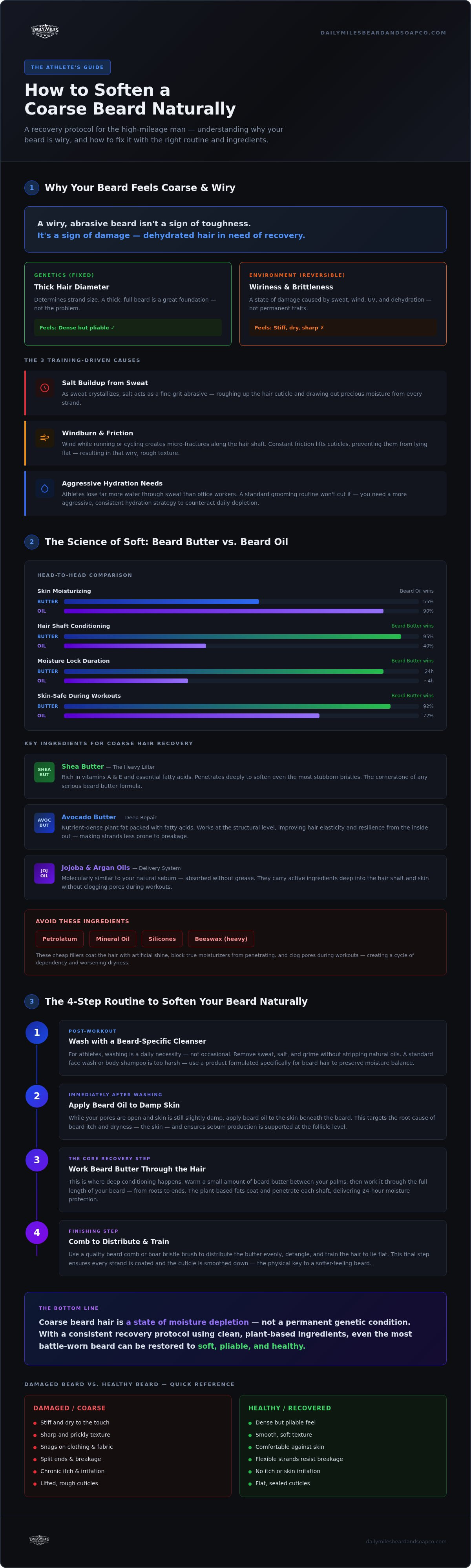
Understanding the Grit: Why Your Beard Feels Coarse and Wiry
That wiry, abrasive beard isn’t a sign of toughness. It’s a sign of damage. Coarse hair is often just dehydrated hair in need of recovery. For the active man, the cause isn’t a mystery. It’s earned through hard miles, punishing workouts, and exposure to the elements. Your beard feels like sandpaper because it’s fighting a battle against environmental stress, and it’s losing.
Every bead of sweat, gust of wind, and hour under the sun strips away the natural oils that keep your facial hair pliable. Your body produces sebum, a natural softener designed to protect hair and skin. But it’s no match for the demands of a high-mileage lifestyle, especially on a longer beard. Sebum can only travel so far from the follicle, leaving the ends brittle and exposed. “Toughing it out” isn’t a strategy. It’s a direct path to split ends, chronic itch, and the kind of skin irritation that distracts you from your performance.
The Impact of High-Mileage Training
Your training regimen is the primary reason your beard feels coarse. It’s a direct consequence of the work you put in.
- Salt Buildup: Sweat is essential for thermoregulation, but the salt it leaves behind is brutal on your beard. As it crystallizes, salt acts as a fine-grit abrasive, roughing up the hair cuticle and drawing out precious moisture.
- Windburn and Friction: The constant wind you face while running or cycling creates micro-fractures along the hair shaft. This constant friction lifts the cuticles, preventing them from lying flat and smooth, which results in a wiry texture.
- Aggressive Hydration Needs: An office worker’s grooming routine won’t cut it. Athletes lose more water and electrolytes through sweat, and their hair and skin pay the price. You require a more aggressive and consistent hydration strategy to counteract this daily depletion.
Genetics vs. Environment
It’s crucial to distinguish between hair that is naturally thick and hair that has become wiry and damaged. Genetics determines the diameter of your hair strands—a thick, full beard is a great foundation. But wiriness, brittleness, and a prickly texture are environmental outcomes. They are states of damage, not permanent traits.
How can you tell the difference? A healthy, thick beard feels dense but pliable. A damaged, coarse beard feels stiff, dry, and sharp to the touch. It snags on clothing and feels uncomfortable against your partner’s skin. The solution isn’t to fight your genetics; it’s to repair the environmental damage. At its core, coarse hair is a state of moisture depletion that can be reversed with a proper recovery protocol.
The Science of Soft: Why Beard Butter for Coarse Hair is Essential
To fix a coarse beard, you need the right tools. The market is flooded with oils, balms, and butters, but for deep, lasting softness, one stands apart. While beard oil is fundamental for skin health, beard butter is the essential conditioning tool for the hair itself. Understanding the difference is critical for your recovery.
- Beard Oil vs. Beard Butter: Think of beard oil as a targeted treatment for the skin beneath your beard. Its primary job is to moisturize your face and prevent dryness and itch at the root. Beard butter, however, is designed for the hair. Its thicker consistency coats the entire hair shaft, delivering deep conditioning that lasts. For a deeper dive, read our guide on beard oil vs. butter for post-run recovery.
- The Staying Power of Butter: Oils are absorbed relatively quickly. Butters, rich in plant-based fats, provide a protective layer that locks in moisture for hours, shielding your beard from wind and dryness long after your run is over.
- The Power of Plant-Based Fats: Ingredients matter. High-performance recovery comes from nutrient-dense plant fats like Shea and Avocado butter. These ingredients are packed with the fatty acids and vitamins necessary to repair damaged hair cuticles.
- 24-Hour Moisture Lock: A quality beard butter doesn’t just sit on the surface. It penetrates the hair to deliver moisture, then seals the cuticle to prevent that moisture from escaping. It’s a time-release hydration system for your face.
Beyond the Surface: Deep Conditioning
Superficial softness isn’t enough. True recovery happens at a structural level. Plant-based butters work their way into the hair’s cortex, improving elasticity and resilience from the inside out. This makes your beard less prone to breakage during physical activity. A flexible hair strand is a strong hair strand.
Furthermore, a bee-free formula is non-negotiable for athletes. Traditional balms use beeswax, which is an excellent sealant but can be heavy and suffocate the skin. During a workout, this can trap sweat and clog pores, leading to irritation and breakouts. A breathable, plant-based butter protects your beard without compromising your skin, making it a crucial piece of your sustainable beard care toolkit.
Key Ingredients for Coarse Hair Recovery
Not all products are created equal. Look for a clean, intentional formula built for performance.
- Shea Butter: This is the heavy lifter in any serious beard butter. Unrefined Shea butter is rich in vitamins A and E and essential fatty acids that penetrate deeply to soften even the most stubborn bristles.
- Plant-Based Carrier Oils: The butters need a delivery system. Carrier oils like jojoba and argan are molecularly similar to your natural sebum, allowing them to be absorbed easily without a greasy residue.
- No Fillers: Avoid products with cheap fillers like petrolatum, mineral oil, or silicones. These ingredients provide an artificial shine that masks the underlying problem. They coat the hair, preventing true moisturizers from getting in and creating a cycle of dependency and dryness.
Clean Without Compromise: Washing for Softness, Not Just Hygiene
For an athlete, washing your beard isn’t an occasional task; it’s a daily necessity. You have to remove the sweat, salt, and grime from your miles. But this is where most men make a critical mistake. They use harsh soaps or regular hair shampoos that strip away every last drop of natural oil, leaving the beard even more coarse and brittle than before. This is the “sandpaper effect.”
The goal is to cleanse without causing collateral damage. You must wash away the grit without stripping the essential lipids that protect your hair and skin. This requires a dedicated beard wash formulated for the task. Unlike hair shampoo, a proper beard wash is pH-balanced for facial skin and uses gentler, sulfate-free cleansing agents. After washing, always use cool or lukewarm water for the final rinse. This helps to close and seal the hair cuticle, locking in moisture and creating a smoother surface.
The Ultra-Soft Cleansing Method
A high-performance cleansing routine is simple and effective. It starts with the right product and the right technique. When you wash, don’t just scrub the hair. Gently massage the cleanser onto the skin beneath your beard. This removes the dead skin cells and salt buildup that cause “beardruff” and itchiness. For a detailed breakdown of the athlete's washing schedule, explore our guide on how often to wash your beard if you work out daily.
Using a sulfate-free wash is non-negotiable for anyone serious about softening a coarse beard. Sulfates are aggressive detergents that create a rich lather but leave hair feeling stripped and straw-like. Our Ultra Soft Beard Wash is a performance-grade cleanser, engineered to remove post-workout grime while depositing moisture, not stripping it away.
Post-Wash Hydration Window
Your actions immediately after washing are just as important as the wash itself. The first three minutes after you step out of the shower are a critical window for hydration. Your hair follicles and cuticles are open and most receptive to the nourishing ingredients in your beard oil and butter.
Do not dry your beard completely. Pat it gently with a towel, leaving it slightly damp. This dampness is your ally. Applying products to a damp beard helps them spread more evenly and effectively. The residual water helps to “trap” the hydration from the oils and butters, pulling them into the hair shaft as it dries. It’s the single best technique to maximize product absorption and kickstart the softening process.
The 4-Step Routine to Soften Your Beard Naturally
Softness isn’t achieved with a single product. It’s earned through a disciplined, daily ritual. Consistency is more powerful than intensity. This simple, rugged 4-step routine is designed to fit into a time-crunched athlete’s lifestyle, transforming a wiry beard into one that is soft, manageable, and healthy.
- Step 1: Cleanse. After every run, workout, or day spent outdoors, wash your beard with a gentle, plant-based beard wash. Focus on cleaning the skin underneath to remove salt and prevent irritation.
- Step 2: Oil the Roots. While the beard is still damp, apply a few drops of high-quality beard oil. Work it directly into the skin beneath the beard. This nourishes the follicles at the source and prevents dry, flaky skin.
- Step 3: Butter the Length. Scoop out a small amount of beard butter for coarse hair. Warm it between your palms until it melts, then apply it to the full length of your beard, from root to tip. This is your conditioning and protective layer.
- Step 4: Distribute. Use a firm, natural bristle brush to evenly distribute the products. Brushing also exfoliates the skin, trains the hairs to grow in a uniform direction, and stimulates blood flow to the follicles.
Step-by-Step Softening Technique
The details make the difference. For most beards, a dime-sized amount of butter is sufficient. For longer or exceptionally coarse beards, you may need a nickel-sized amount. The key is the “warming” technique: never apply cold, hard butter directly to your beard. Vigorously rub it between your palms until it’s a smooth, liquid oil. This ensures an even, non-clumpy application.
This entire process should take no more than two minutes and should be integrated into your post-workout recovery. It’s not about pampering; it’s about maintenance, just like stretching or foam rolling. For a complete breakdown, check out the runner’s beard care routine.
Nightly Recovery: The "After Sunset" Secret
Your body does its most important repair work while you sleep. The same is true for your beard. Nighttime is the optimal window for deep softening. Before bed, apply a slightly heavier layer of beard butter than you would in the morning. This allows the nutrient-rich plant fats to absorb slowly over several hours without interruption.
This “After Sunset” ritual ensures you get maximum absorption and conditioning. You’ll wake up with a beard that is noticeably softer and more manageable, not the tangled “bird’s nest” that greets you after a restless night. It’s a simple hack to accelerate your results and make your mornings more efficient.
Facial Recovery: Small-Batch Solutions for Coarse Hair
The products you use are your gear. And just like your running shoes or your hydration pack, quality and craftsmanship matter. We built Daily Miles on a simple philosophy: what you put on your body should be as clean and intentional as the lifestyle you live. That’s why we use small-batch production. It’s not a marketing gimmick; it’s a commitment to quality. It ensures that the plant-based ingredients in every jar are fresh, potent, and active.
Our entire line is tested on trails, not in a lab. It’s designed for the unique demands of runners and outdoorsmen. The Backcountry Beard Butter was specifically formulated to provide all-day softening and protection against the elements. It’s built on a foundation of vegan, palm-free, and bee-free ethics, because high performance should never come at the expense of integrity.
Performance Ingredients That Work
We choose ingredients for their proven recovery properties. Essential oils like Copaiba and Frankincense are included not for fragrance, but for their anti-inflammatory and skin-repairing benefits. We use hard-working plant fats like Shea and Avocado butter instead of synthetic silicones because they deliver genuine, structural repair, not just a cosmetic illusion of softness.
Your beard is not an accessory. It’s part of you. Treat it with the same respect you give your training gear. Invest in tools that are built to last, perform under pressure, and support your body’s natural recovery process.
Join the Daily Miles Ritual
Getting started doesn’t have to be complicated. Our curated bundles provide everything you need to build a simple, effective routine and finally solve the problem of a coarse, wiry beard. Softness isn’t a mystery. It’s earned through the discipline of a daily ritual.
Your face deserves the same level of care and recovery as the rest of your body. Stop fighting against a dry, prickly beard and start working with a routine that delivers real results. Upgrade your recovery with Backcountry Beard Butter.
Frequently Asked Questions
- How long does it take to soften a coarse beard naturally?
-
With a consistent daily routine, you should feel a noticeable difference in texture within the first week. Significant, lasting softness is typically achieved after 2-3 weeks as the hair becomes properly hydrated and conditioned.
- Can I use regular hair conditioner on my beard?
-
It’s not recommended. Hair conditioners are formulated for the scalp and can contain silicones and other ingredients that clog pores on the more sensitive skin of your face, leading to breakouts and irritation.
- Does beard butter help with an itchy beard after running?
-
Absolutely. The itch after a run is usually caused by dry skin and the abrasive friction of coarse, salt-caked hair. Beard butter moisturizes both the skin and the hair, immediately reducing irritation and softening the bristles that cause the itch.
- How often should I apply beard butter for coarse hair?
-
For best results, apply it once daily after washing your beard. For extremely dry or coarse beards, a second, lighter application in the evening can accelerate the softening process.
- Will sweating make my beard coarser over time?
-
Yes, if left unmanaged. The salt residue from sweat leaches moisture from the hair shaft, making it dry and brittle. This is why a post-workout cleanse and rehydration routine is essential for athletes with beards.
- What is the best natural oil for softening wiry facial hair?
-
Jojoba and Argan oils are two of the best carrier oils. Their molecular structure is very similar to your skin’s natural sebum, allowing them to absorb quickly and effectively to moisturize both hair and skin without a greasy feeling.
- Is beeswax bad for a coarse beard during exercise?
-
Beeswax is a heavy sealant that isn't very breathable. When you sweat, it can trap moisture and bacteria against your skin, potentially clogging pores. For athletes, lighter, plant-based butters offer protection without suffocation.
- How do I stop my beard from being prickly for my partner?
-
The entire 4-step routine outlined in this guide is the answer. A prickly beard is a dry, damaged beard. By consistently cleansing, oiling, and conditioning with a high-quality beard butter, you will transform the texture from sharp and wiry to soft and pleasant to the touch.
Read more
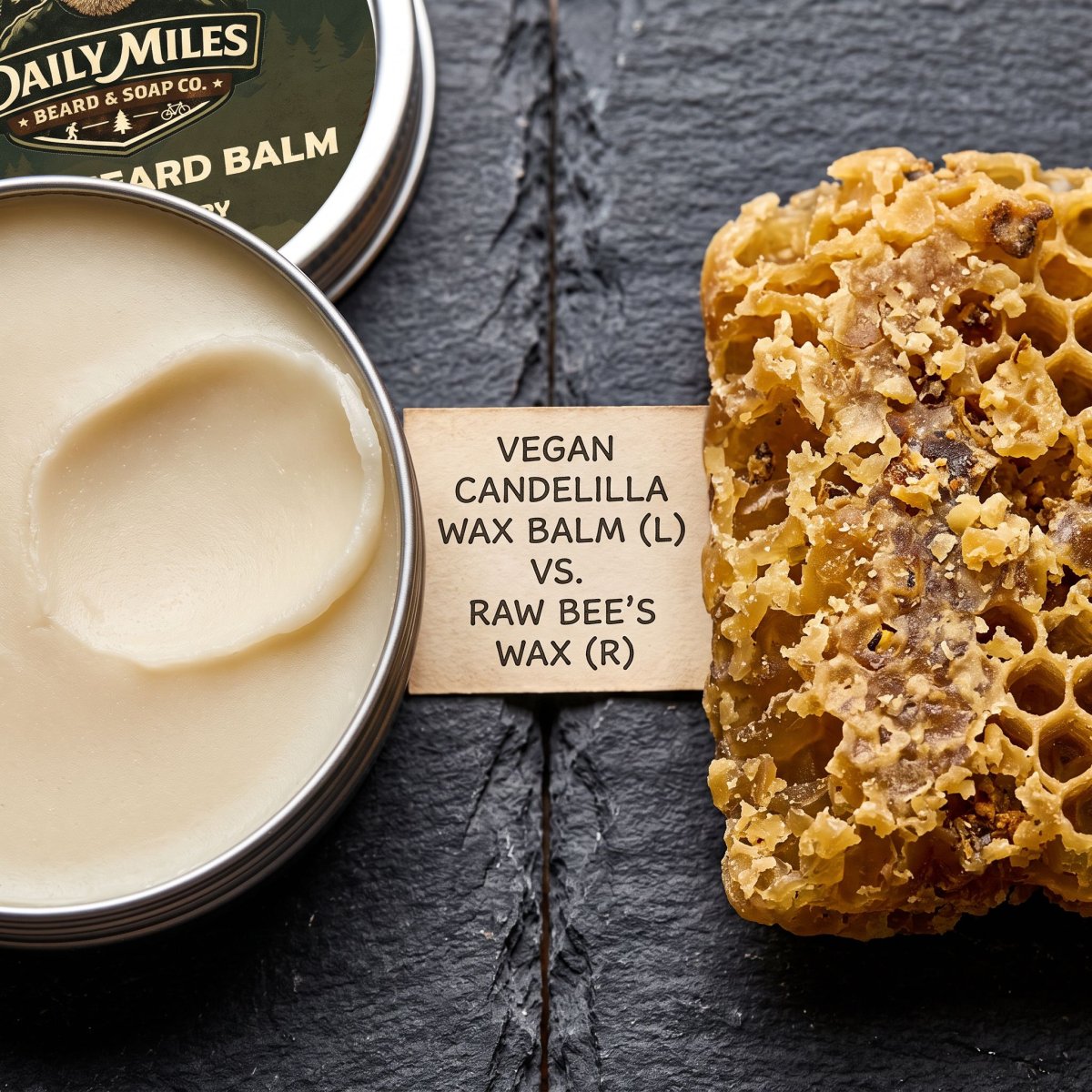
That heavy beeswax balm you trust for a secure hold is actually your beard's worst enemy. It doesn't protect. It suffocates. On a twenty-mile long run, it traps salt and heat against your skin. Thi...
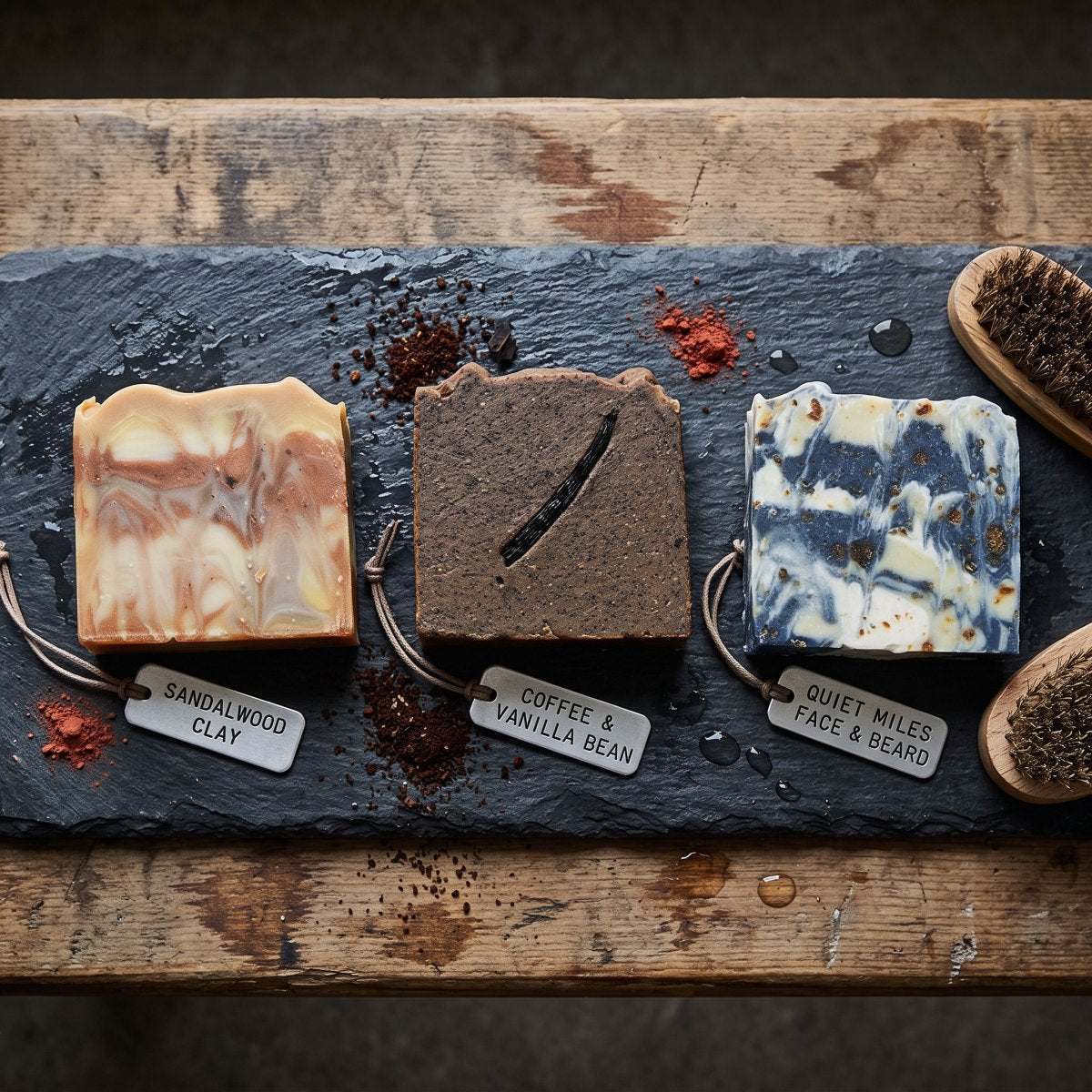
Your recovery doesn't start with a foam roller. It starts in the shower. Most athletes treat hygiene as an afterthought. They use harsh, mass-market bars. These bars strip away more than just sweat...