
Beard Care for Marathon Runners: 5 Myths About Sweat, Salt, and Performance
That heavy beeswax balm you trust for a secure hold is actually your beard's worst enemy. It doesn't protect. It suffocates. On a twenty-mile long run, it traps salt and heat against your skin. This creates a recipe for "beardne" and chronic irritation. You've been told it's essential for control, but the truth is it's sabotaging your performance.
You respect the grind. You embrace the sweat. But you shouldn't have to choose between a dedicated training block and a healthy beard. Effective beard care for triathletes requires a shift in mindset. It's not about the soft language of the beauty industry. It's about resilience and recovery. You've felt the sting of salt-induced beardruff. You've seen the brittle results of over-washing after every session.
We're here to debunk five common grooming myths that are damaging your facial hair. This isn't fluff. It's a streamlined, high-performance strategy to keep your skin clear and your beard manageable. We'll show you how to maintain your grit without the itch. It's time to build a ritual that lasts as long as your stride.
Key Takeaways
- Stop salt crystallization from siphoning moisture. Learn to neutralize lactic acid before it disrupts your skin's pH.
- Master the "Rinse Ritual." Discover why over-washing is a liability in a high-performance routine for beard care for triathletes.
- Switch to breathable holds. Ditch the beeswax barrier that traps heat and bacteria against your face during long efforts.
- Execute the Marathon Recovery Ritual. Use a three-step protocol to flush salt and restore hydration immediately after the finish line.
- Prioritize fresh ingredients. Understand why small-batch integrity is essential for skin recovery during peak training cycles.
The Science of Sweat: Why Marathon Running Challenges Your Beard
A climate-controlled gym session is a world away from a twenty-mile long run. Your beard knows the difference. Long-distance endurance training introduces environmental stressors that a simple weight room can't match. Understanding The Science of Sweat is the first step toward effective maintenance. Sweat is not just water. It is a chemical cocktail of salt, minerals, and lactic acid. This mixture sits on your skin and hair for hours. It works against your grooming goals with every mile. It requires a disciplined approach to recovery.
Salt crystallization is the primary culprit. As the water in your sweat evaporates, solid salt crystals remain behind. These crystals are hygroscopic. They literally siphon moisture out of your hair shaft to balance the environment. This process leaves your beard feeling like straw. It becomes brittle. It snaps easily. This is a unique challenge for beard care for triathletes who spend hours exposed to the elements. The salt doesn't just sit there. It actively degrades the hair's structural integrity while you focus on your pace.
Lactic acid also plays a role in this breakdown. During intense physical exertion, your skin's pH levels shift toward acidity. This disruption can irritate the hair follicles and the epidermis. It weakens the skin's natural barrier. Then there is the friction factor. Your running gait creates constant, repetitive movement. If you wear a hydration vest or a high-collared jacket, your beard rubs against the fabric thousands of times. This mechanical stress frays the hair cuticles. It turns a well-kept beard into a tangled, damaged mess by the time you hit the finish line.
The Salt Trap: From Hydrated to Brittle
Dried salt acts like microscopic sandpaper on your facial hair. Every movement of your head or touch of your hand grinds these crystals against the hair cuticle. This physical abrasion strips away the protective outer layer of the hair. Rinsing with plain water after a run is a good start, but it often fails to remove all mineral buildup. You need a deeper approach to how to keep beard soft while running. Without proper removal, the salt continues to dehydrate the hair long after you've finished your recovery drink. It's a silent performance killer for your grooming routine.
Breathability and the Epidermis
Sweat trapped against the skin is a recipe for disaster. When your pores are clogged by heavy products, the salt and bacteria have nowhere to go. This leads to folliculitis and painful breakouts under the hair. High-performance grooming requires non-comedogenic ingredients that allow the skin to breathe during high-heat activity. Heavy sealants might work for a desk job, but they fail on the road. The Athlete Beard Crisis is a constant battle to maintain a balance of hygiene and hydration while pushing physical limits.
Myth #1: You Must Wash Your Beard After Every Run
Most runners finish a session and reach for the soap. They think sweat is a contaminant that needs to be nuked with detergent. This is a mistake. Sweating is a natural cooling process, not a sign of filth. Washing your beard seven days a week destroys the delicate ecosystem of your facial hair. It leads to a cycle of dryness and damage that no amount of post-wash oil can fully fix. Discipline in training means knowing when to push and when to recover. The same applies to your grooming.
Your skin produces sebum. This is a natural oil. It is your beard's first line of defense. Sebum coats the hair shaft to lock in moisture and provide a waterproof barrier. Frequent soap use strips this oil away faster than your body can replace it. Without sebum, the hair becomes a desert. It feels like wire. It starts to itch. These are the early signs of a "stripped" beard. If you ignore them, split ends will follow. Once the hair cuticle is blown open, the damage is permanent. You can't repair a split end; you can only cut it off.
For the daily trainer, "The Rinse Ritual" is the superior choice. Use lukewarm water to flush the salt and lactic acid from the hair. Use your fingertips to massage the skin underneath. This mechanical action removes debris and mineral buildup without chemical intervention. It preserves the natural oils that keep your hair elastic. Save the deep cleaning for when it's actually necessary. Your beard will be softer, stronger, and more resilient on race day.
The Co-Wash Strategy for Runners
Sometimes water alone isn't enough to handle the grit of a trail run. This is where a conditioner-heavy approach, or "co-washing," becomes vital. It breaks down surface grime while simultaneously delivering hydration. Following a specific beard care routine for runners prevents mid-week dryness. Always use lukewarm water. Hot water acts as a solvent that melts away your protective oils. Lukewarm water is the professional's choice for preserving hair elasticity and skin health.
Identifying High-Performance Cleansers
Check your labels for sulfates. These are harsh detergents used in industrial cleaners. They have no place in beard care for triathletes. If your soap produces a massive, pillowy lather, it's likely stripping your skin bare. This causes "beardruff," which is often an inflammatory response to over-cleansing rather than simple dry skin. On your high-mileage weeks, use a product like Ultra Soft Beard Wash only once or twice. It provides a thorough clean without the collateral damage of traditional shampoos. Recovery starts the moment you stop moving, so choose recovery tools for your beard that respect your hard work.
Myth #2: Beeswax is the Best Hold for Active Beards
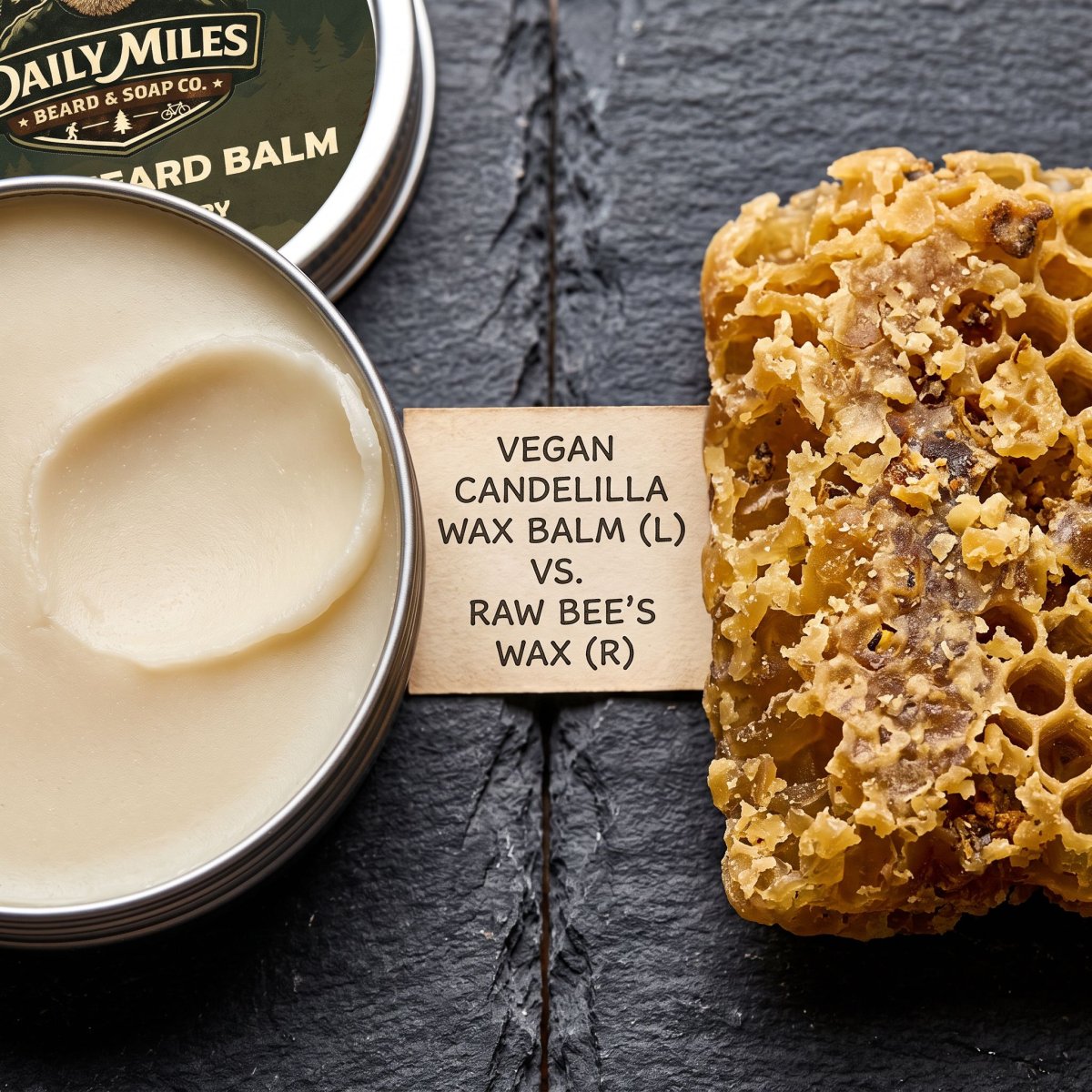
Many athletes reach for heavy, wax-based balms to keep their beard in place. They want control. They want a look that lasts through the wind and the miles. But beeswax is a liability on the road. It creates a "Sealant Effect." This is a literal wall. It traps sweat, salt, and bacteria against your skin. Your face needs to breathe. When you block that process, you invite "beardne" and chronic irritation. Proper beard care for triathletes focuses on breathability, not just hold. Control should never come at the cost of skin health.
The melting point of traditional balms is another failure point. During a marathon, your core temperature rises. Friction increases. This heat liquefies beeswax. It becomes a greasy film that migrates from your hair to your skin. It clogs pores. It irritates your eyes. Plant-based waxes, like Candelilla, offer a higher-performance alternative. They provide structure without the weight. They allow for follicle oxygenation. This is the "Bee-Free" advantage. It keeps your skin healthy while you push your limits. It respects the demands of your body.
Beeswax vs. Plant-Based Butters
Weight matters. Beeswax has a high molecular weight. It sits on top of the hair. Shea and mango butters have a lower molecular weight. They penetrate. They nourish the core of the hair shaft. For high-mileage days, Backcountry Beard Butter is the superior choice. It provides a soft, manageable hold that doesn't suffocate. It supports the hair during the effort. For a deeper look at post-run needs, check our guide on Beard Oil vs. Butter for Post-Run Recovery. It breaks down the science of rehydration.
Performance Styling in the Wild
You can achieve a disciplined look without sacrificing health. Bee-free products excel in extreme heat. They stay stable. They don't turn into oil slicks on your face. This is essential for maintaining focus during a race. Avoid applying heavy wax-based products on race morning. They will fail you at mile eighteen when your skin is screaming for air. Choose breathable, plant-based solutions instead. Your beard should support your performance, not hinder it. Stick to the essentials. Keep it lean.
The Marathon Recovery Ritual: A 3-Step Protocol
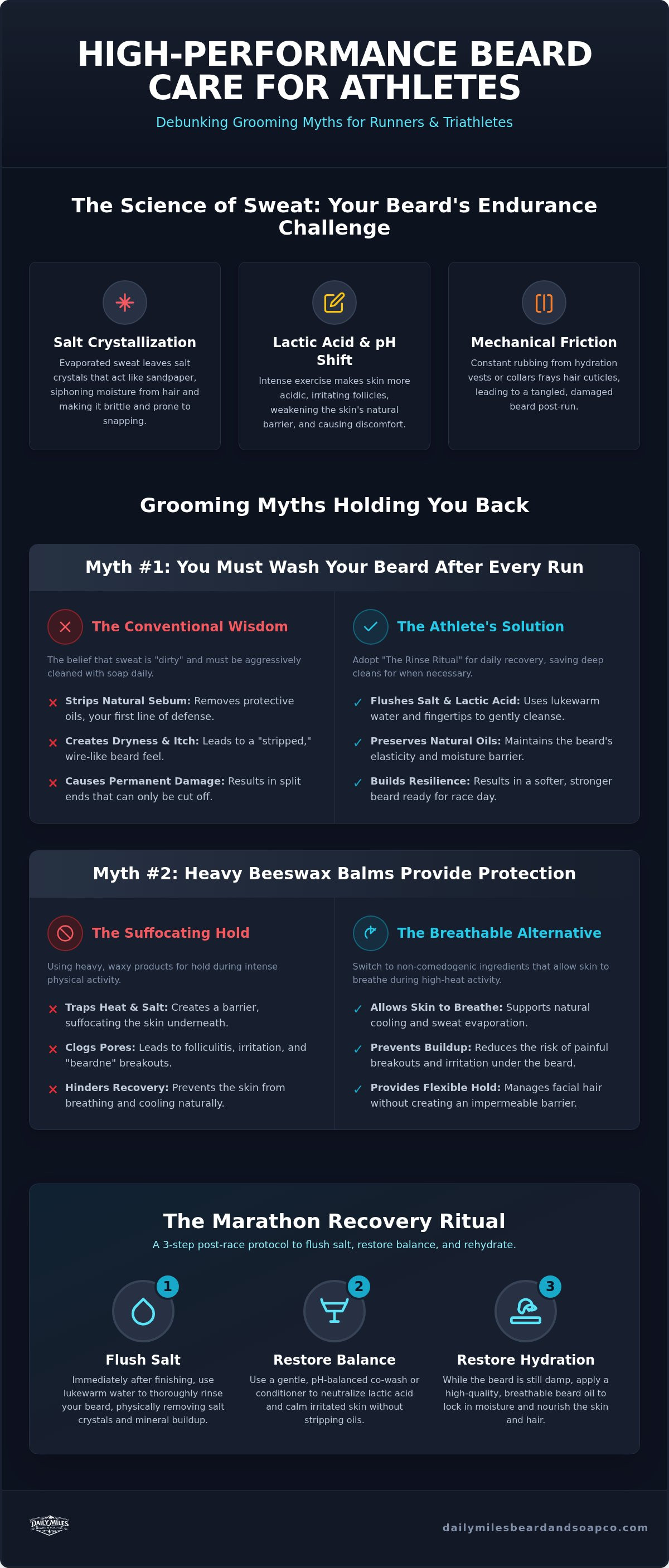
Recovery is not passive. It is a deliberate act of restoration. You wouldn't skip your post-run protein, so don't skip your beard maintenance. A disciplined approach to beard care for triathletes requires a systematic recovery ritual. This protocol ensures your facial hair remains a sign of strength rather than a casualty of the road. Follow these steps immediately after your session to neutralize damage before it takes hold.
Step 1: The Post-Run Flush. Time is the enemy here. As sweat evaporates, salt crystals harden. They act like microscopic daggers against the hair cuticle. Flush your beard with lukewarm water the moment you stop moving. Do not wait for your heart rate to fully drop. Mechanical rinsing removes the bulk of the lactic acid and salt before they can siphon moisture from the hair shaft. It is the most critical step in your immediate recovery.
Step 2: Targeted Cleansing. Once the surface salt is gone, you need to address the skin. Use Quiet Miles Face & Beard Soap for dual-action recovery. This is a high-performance tool designed for efficiency. It cuts through deep-seated grit without stripping the essential sebum you worked hard to preserve. It saves time. It clears pores. It respects the skin's pH balance after the acidic stress of a long effort.
Step 3: Deep Rehydration. Your beard needs "sleep" just like your muscles. Apply After Sunset Beard Oil while the hair is still slightly damp. This oil is formulated for recovery, not just scent. It penetrates the hair shaft to replace lost lipids. During your taper week, implement "Beard Rest" days. Reduce your styling products. Let your skin breathe. Focus entirely on hydration to ensure your beard is as ready for race day as your legs.
Nightly Recovery: The "After Sunset" Strategy
The body repairs itself during the REM cycle. This is when cellular turnover peaks. Applying After Sunset Beard Oil before bed maximizes this window of opportunity. The plant-based essential oils soothe skin inflammation caused by hours of wind and sun exposure. Nighttime allows for deep, uninterrupted oil penetration. You wake up with a beard that is soft, resilient, and ready for the next interval session. It is the ultimate tool for long-term hair health.
Tool Maintenance: The Overlooked Step
Your gear matters. If you use a dirty comb, you are re-introducing salt and bacteria into a clean beard. Wash your Beard Combs once a week with the same soap you use on your face. Choose a comb with wide, hand-polished teeth. This prevents snagging on hair that may be tangled from high-speed movement or wind. Proper tool maintenance is the final piece of a professional grooming ritual. Invest in quality. Maintain it with discipline. Secure your performance by choosing the right recovery tools for endurance athletes.
Why Daily Miles is the Athlete’s Choice for 2026
Daily Miles is not a grooming brand for the casual observer. It is a performance partner for those who do the work. We operate on a single philosophy: Miles Earned. Your grooming ritual should mirror your training discipline. Mass-market products are designed for shelf life. Our products are designed for the pavement. This is why we prioritize small-batch integrity. Fresh ingredients matter for skin that is constantly stressed by sweat and salt. They retain their potency. They provide genuine recovery. We don't use fillers. Every ingredient serves a specific purpose.
Sustainability is a core component of our performance. We are palm-free and vegan. This commitment ensures that only the purest plant-based materials touch your skin. It is about transparency. It is about durability. Ritual Bundles simplify the logistical chaos of race-day prep. They provide a methodical system for the endurance runner. No guesswork. Just high-performance tools in a streamlined package. This approach makes beard care for triathletes efficient during the most demanding training blocks. You focus on the pace. We focus on the recovery.
Plant-Based Performance
We eliminate the junk. No harsh chemicals. No synthetic fragrances. No phthalates. Our "bee-free" formulation is a deliberate performance choice. As established, beeswax traps heat and bacteria against the skin. Our plant-based waxes allow for maximum breathability. This is essential for maintaining skin health during high-heat efforts. We believe in ethical sourcing that supports your physical output. Explore our full range of Sustainable Beard Care Products to see how we lead the industry in 2026.
The Daily Miles Guarantee
Our products are tested in the backcountry and proven on the pavement. We are athletes. We use these formulations on 20-mile long runs and through grueling transition drills. We know exactly what fails at mile eighteen. Our commitment to small-batch quality means you receive a product that hasn't been sitting in a warehouse for years. It is fresh. It is effective. It is built for the long haul. You have earned your miles. Your beard should reflect that resilience. Shop the Daily Miles Athlete Collection and elevate your recovery ritual today.
Own the Recovery Ritual
Your training is calculated. Your recovery should be the same. The road is unforgiving to those who ignore the details. You've learned that salt crystallization siphons moisture. You know that heavy beeswax suffocates the skin. You understand that over-washing is a tactical error. High-performance beard care for triathletes is about managing these stressors with precision. It is about resilience. It is about recovery.
Don't let a brittle beard distract you at mile twenty. Choose tools that respect the effort you put in. Our 100% Vegan and Bee-Free formulations are built for the grit of endurance sport. We rely on small-batch craftsmanship to ensure ingredient integrity. This is grooming designed for high-performance athletes who demand more from their gear. Stop settling for mass-market fillers that fail under heat.
Upgrade your run with the Daily Miles Ritual Bundle. Secure your skin health. Protect your hair. Finish every race with the same discipline you started with. Keep moving.
Frequently Asked Questions
Does sweat cause beard hair to fall out during marathon training?
Sweat does not directly cause hair follicles to die or hair to fall out. However, the salt left behind after evaporation creates friction and dehydration. This leads to breakage and thinning over time. Proper beard care for triathletes focuses on removing these minerals to maintain structural integrity and prevent brittle strands from snapping during your gait.
How often should a runner wash their beard with soap?
Limit full soap washes to one or two times per week. Daily runners should rely on lukewarm water rinses to remove salt and surface grit after every session. Over-washing strips the natural sebum needed for elasticity. If you need a deeper mid-week clean, use a gentle option like Ultra Soft Beard Wash to avoid that wire-like texture.
Can I use regular hair shampoo on my beard after a run?
Regular hair shampoo is too aggressive for facial hair and the skin underneath. It contains harsh detergents designed for the oilier environment of the scalp. Using it on your face will cause chronic dryness and irritation. Stick to a dedicated face and beard soap that respects your skin's pH balance after a long effort.
What is the best beard product to prevent windburn during winter runs?
Backcountry Beard Butter is the most effective tool for winter protection. It creates a breathable, plant-based barrier against cold air and biting winds. Unlike heavy waxes, it stays flexible and nourishes the hair core. Apply it before you head out to lock in moisture and shield your skin from the elements without clogging pores.
Is beeswax bad for your skin if you sweat a lot?
Beeswax is a liability during high-intensity training because it is non-breathable. It traps heat and bacteria against the skin while you move. This often results in "beardne" and inflamed follicles. Use bee-free alternatives like Candelilla wax for a hold that allows your epidermis to function normally during heavy exertion.
How do I get the smell of sweat out of my beard without drying it out?
Use a concentrated bar like Quiet Miles Face & Beard Soap for a targeted clean. It removes odor-causing bacteria without the synthetic fragrances or harsh sulfates found in mass-market liquid washes. A quick massage with lukewarm water is usually enough to refresh the hair. Focus on the skin where the sweat originates to ensure a clean finish.
Should I apply beard oil before or after my run?
Apply beard oil after your run and post-shower rinse. Oil is a recovery tool designed to seal in moisture on clean, damp hair. Applying it before a run can attract road dust and trap heat against your face. Use After Sunset Beard Oil as part of your nightly ritual to support hair repair while you sleep.
What are the signs of "salt damage" in a runner’s beard?
Salt damage manifests as a crunching sound when you touch the hair or a straw-like texture. You will notice increased split ends and "beardruff" flakes caused by severe skin dehydration. These are clear indicators that your current routine for beard care for triathletes isn't neutralizing minerals effectively. Immediate rehydration is necessary to prevent permanent fraying.
Read more
Sweat is a sign of effort, but it is a corrosive force for your facial hair. You didn't grind through a morning tempo run just to end up with a beard that feels like steel wool. Salt crystals from ...

Table of Contents Understanding the Grit: Why Your Beard Feels Coarse and Wiry The Science of Soft: Why Beard Butter for Coarse Hair is Essential Clean Without Compromise: Washing for Softness, N...