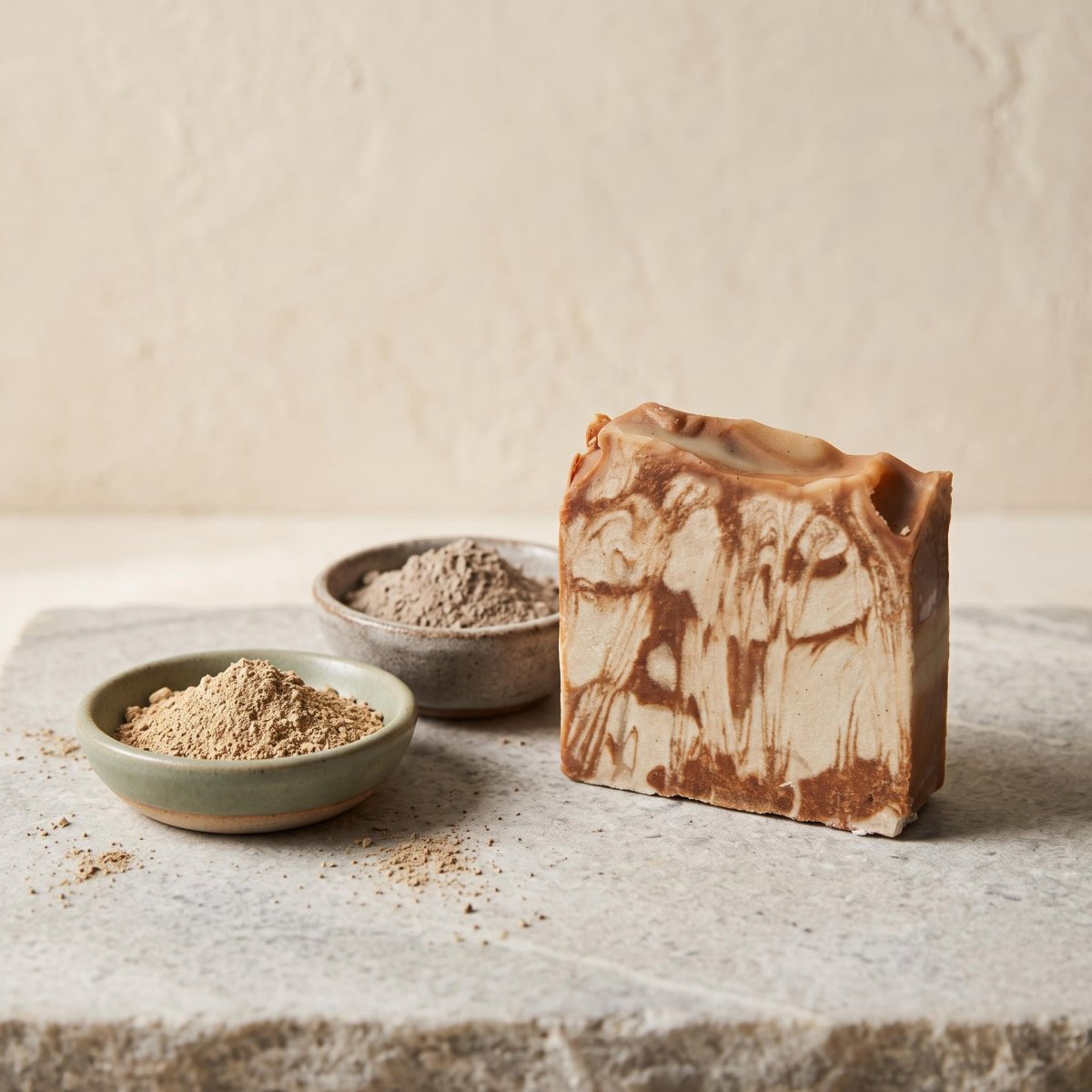
Benefits of Clay Soap for Oily Skin: Choosing a Clay
For oily skin, the benefits of clay soap come down to a more targeted cleanse: clay can absorb excess sebum and impurities so they rinse away. Bentonite is a strong option for oilier, congested skin, while French green clay is known for its high absorbency. Neither needs to leave your skin feeling stripped to do its job.
That balance matters. A bar that removes surface oil can feel useful, but over-cleansing or scrubbing too hard may leave skin tight, dry, or more reactive. The right clay depends on how oily your skin is and how it feels after washing.
This guide explains how clay works in soap, what bentonite and French green clay offer, and how to compare bars for oily skin. You’ll also learn what to look for in a formula and how to use clay soap without making your routine harsher than necessary. Straightforward care, no guesswork.
Key Takeaways
- Clay can help lift excess oil and impurities during cleansing, while its fine particles offer mild exfoliation.
- Bentonite is a more absorbent choice for oily or congested skin; French green clay is also valued for absorbing oil.
- Choose a bar by your skin’s needs and how it feels after washing, not by the clay name alone.
- Keep cleansing gentle. Tightness or increased reactivity can signal that your routine is too stripping.
- Explore beard-care options separately from face cleansing, including After Sunset Beard Oil for beard care.
What Is a Clay Soap Bar and How Does It Work?
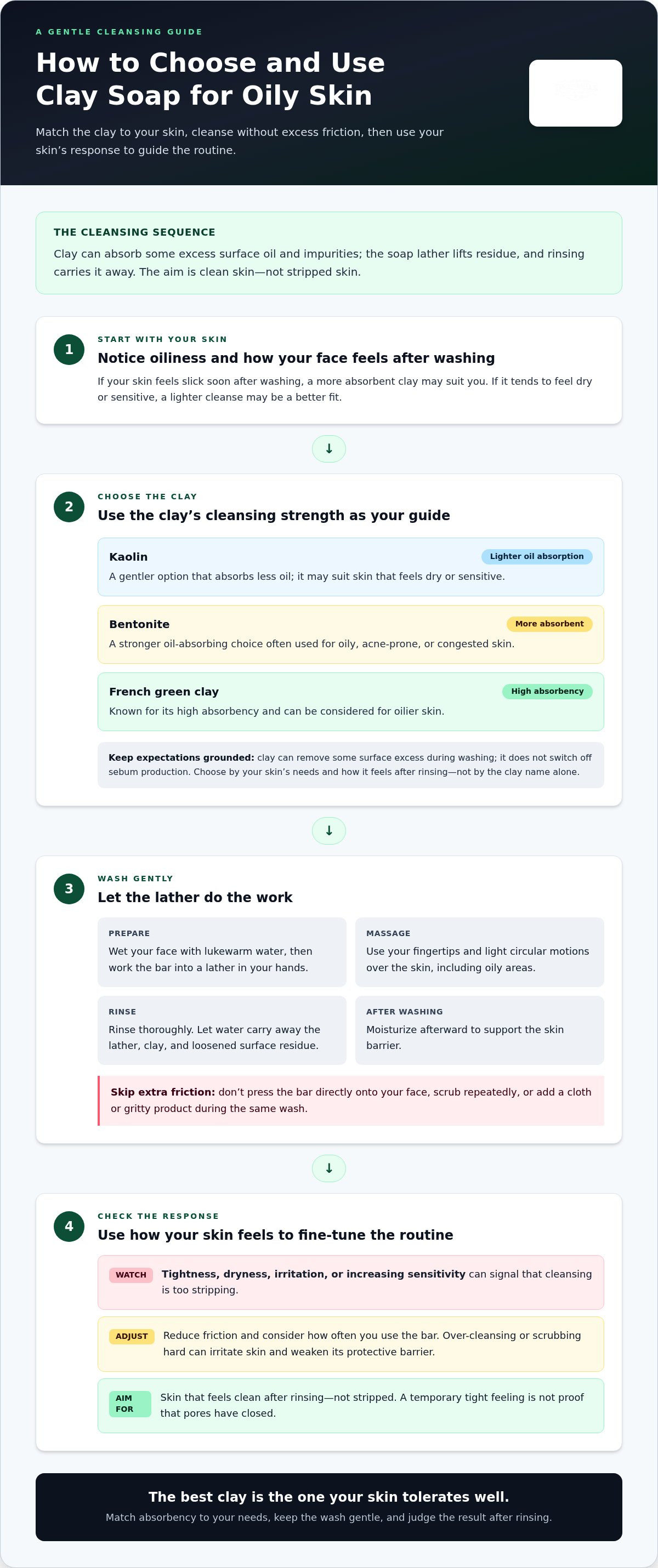
A clay soap bar combines cleansing soap with fine mineral particles, such as kaolin, bentonite, or French green clay. As you wash, the lather lifts surface dirt and oil while the clay can absorb excess sebum and impurities. Water rinses them away. For oily, congestion-prone skin, this combination can make cleansing feel more thorough without relying on a coarse scrub.
Clay’s texture matters. Fine particles provide gentle physical exfoliation as you massage the lather over your skin. They can help lift dead skin cells from the surface without scraping like larger, rougher particles. Kaolin is especially fine; green zeolite has a slightly larger texture and may feel more exfoliating. Pressure also affects the experience, so use light circular motions rather than pressing hard.
Clay soap may also have a mild astringent effect. After rinsing, skin can feel temporarily tighter and look cleaner or smoother. That feeling doesn’t mean pores have closed; cleansing removes oil and debris from their openings. The benefits of clay soap for oily skin come from this practical pairing: soap cleanses, while clay contributes oil absorption and mild exfoliation.
For oily skin, clay and charcoal can both support cleansing, but neither is automatically better for everyone. Clay can absorb excess oil, while activated charcoal can attract dirt, oil, and other impurities. A bar containing both may suit oily or combination skin; the best fit depends on how your skin feels afterward.
Risks usually come from an overly aggressive routine, not exfoliation alone. Scrubbing hard or washing too often can irritate skin and weaken its protective barrier. Watch for tightness, dryness, or increasing sensitivity after cleansing. If skin becomes reactive or feels oily again soon after washing, your routine may be stripping it rather than balancing it.
Keep the process gentle: wet your face with lukewarm water, work the bar into a lather in your hands, then massage lightly with your fingertips. Let the lather sit briefly, rinse thoroughly, and moisturize afterward. Skip extra scrubbing with a cloth or gritty product during the same wash. This lets clay cleanse without adding unnecessary friction.
Clay in cold-process soap can also contribute to a creamy, silky lather and may improve bar hardness. Those qualities shape the washing experience, but they don’t replace choosing a clay that suits your skin. Fine kaolin offers a lighter touch; more absorbent clays like bentonite or French green clay may suit oilier skin. Start with how your skin feels after rinsing, not just the ingredient name.
How clay soap cleanses and absorbs excess oil
Clay contributes oil-absorbing properties to soap, while the soap’s lather lifts surface residue. Together, they help wash excess sebum and everyday impurities from oily skin.
Clay’s Oil-Absorbing Properties
Clay is a soft, fine-grained mineral that can absorb oil and sebum from the skin’s surface. As you work clay soap into a lather, the clay meets excess oil; rinsing carries away the lather and loosened residue. This can help when your face feels slick by midday, since cleansing targets surface oil without relying on a rough scrub.
The result depends partly on the clay in the bar. White kaolin absorbs a small amount of oil and offers light cleansing, while bentonite is more absorbent and often suits oily skin. Clay doesn’t switch off sebum production. It helps remove some surface excess during washing, so judge the fit by how your skin feels after rinsing, not by how dry you can make it.
Technique shapes the cleanse, too. Wet your skin with lukewarm water, create lather in your hands, and massage it gently over oily areas such as the forehead, nose, and chin. Rinse thoroughly. Avoid pressing the bar directly onto your face or scrubbing repeatedly; friction can make cleansing harsher without improving oil removal.
Dead Sea Clay and Oil Absorption
Dead Sea Clay is used in skincare to help absorb excess oil, and it may also help reduce inflammation in acne-prone skin. In a soap bar, it works as part of the wash: lather spreads the clay over the skin, and rinsing removes the mixture of soap, clay, and surface residue. The clay type is therefore worth considering when choosing a cleanser for oily skin.
Oil absorption is only one factor. If your skin feels tight after a Dead Sea Clay cleanse, reduce friction and consider how often you use the bar. A balanced wash should leave skin clean, not stripped. Follow with moisturizer to support the skin barrier, especially if your routine also includes other exfoliating or cleansing products.
To compare bars, look at the named clay and the overall cleansing experience rather than color or texture alone. A clay soap bar for your routine may fit a preference for clay-based cleansing, but use it gently and assess how your skin responds after rinsing.
Clays are soft, fine-grained minerals commonly used in skincare for their ability to absorb excess oil. Cold-process soap containing clay can absorb excess oil and may help prevent clogged pores.
Bentonite clay for oily, acne-prone, and congested skin
Kaolin, bentonite, and French green clay are used in soaps for oily skin. Clay soap can also dry or irritate skin if you cleanse too often or your skin barrier is already weakened.
Bentonite and Kaolin Properties
Bentonite absorbs excess oil more strongly than kaolin, which offers lighter cleansing. That difference helps you match a bar to your skin’s needs. If your face feels slick soon after washing, bentonite may provide a more absorbent cleanse. If you want a gentler option, kaolin absorbs less and may suit skin that feels dry or sensitive.
Both clays can help remove surface impurities during washing. Bentonite is often chosen for oily or acne-prone skin, while kaolin’s gentler oil absorption can suit skin that finds stronger clay too drying. Neither clay changes how much sebum your skin produces. Instead, they help remove some surface oil and residue that can contribute to a congested feeling.
Soothing Oily and Congested Skin
Kaolin and bentonite are both used in skincare for their potential to calm irritation, redness, and inflammation. For oily, acne-prone skin, that may matter because congestion can come with visible redness and discomfort. Clay soap can cleanse away oil and impurities, while the choice of clay affects how much oil the bar absorbs.
Bentonite may help unclog pores by absorbing excess sebum and debris from the skin’s surface. Keeping pore openings clear can reduce their appearance, but clay soap isn’t an acne treatment. Kaolin provides a lighter cleanse and may be a better match if your skin feels reactive. Avoid rough scrubbing, which adds friction without making the clay work better.
Potential Dryness or Irritation
Yes, clay soap can leave oily skin dry or irritated, especially if you use it too often or your skin is already compromised. Clay can absorb oil and impurities, but it can also remove lipids that support the protective barrier. Watch for tightness, dryness, or increasing sensitivity after washing. These signs suggest your cleansing routine may be too aggressive.
Adjust your routine before adding more cleansing power. Use lukewarm water, massage the lather lightly, and rinse thoroughly. If bentonite leaves your skin feeling tight, switch to a milder clay such as kaolin or use the soap less often. Moisturizer after cleansing helps support the skin barrier. Patch test a new clay soap if your skin is sensitive.
For a practical choice, compare the clay type with your skin’s response after rinsing. Bentonite suits a stronger oil-absorbing cleanse; kaolin offers a lighter touch. French green clay is another absorbent option for oily or congested skin. Keep dead skin cells in perspective: clay’s mild exfoliation can lift surface buildup, but a bar should not leave your face raw, tight, or more reactive.
French green clay for oily and acne-prone skin
French green clay is a highly absorbent ingredient used in soaps for oily or congested skin. Its properties make it worth comparing with other green clays when choosing a bar.
French Green Clay and Sebum Regulation
French green clay absorbs excess oil and helps regulate sebum on oily skin. In soap, it also helps draw impurities from the skin during cleansing. This may suit a complexion that often feels slick or congested, but absorption alone doesn’t determine whether a bar is right for you. Consider how your skin feels after rinsing, especially if it’s sensitive or prone to tightness.
Green clay may be a useful option for oily or congested skin. A bar containing French green clay removes surface oil during a wash; it doesn’t stop your skin from producing sebum. That distinction helps set realistic expectations. The aim is a clean-feeling complexion, not a completely oil-free one.
Green Clays for Oily and Congested Skin
French green clay is a highly absorbent choice for oily or acne-prone skin, while green zeolite has a slightly larger texture and offers gentle exfoliation. The distinction matters when comparing ingredients: French green clay is valued for absorbing oil, while green zeolite adds mild textural polishing during washing. Both are green clays, but they don’t offer identical cleansing experiences.
Green zeolite forms when volcanic rocks and ash react with alkaline groundwater. In soap, its somewhat larger particles gently exfoliate skin as you massage the lather. French green clay, by contrast, is used for its absorbency and ability to draw impurities from the skin. If surface oil is your main concern, focus on the clay’s cleansing role. If you also want mild exfoliation, consider the texture.
Choose based on your skin’s response, not the word “green” on a label. For example, an oily forehead with dry-feeling cheeks may need a gentler approach than an evenly oily complexion. Use a French green clay bar gently, rinse well, and notice whether your skin feels comfortable or tight. That after-wash feeling helps you assess how the ingredient works in your routine.
Sensitivity matters, too. If your skin reacts easily, patch test a new clay soap before using it across your face. Avoid vigorous rubbing, particularly with a soap containing green zeolite’s larger particles. Gentle contact is enough to let the lather cleanse and the texture exfoliate. Stop using a bar that leaves your skin increasingly irritated or uncomfortable.
French green clay is best understood as a cleansing ingredient for oilier skin types, not a stand-alone acne solution. Pair the bar’s absorbency with a measured routine: cleanse without scrubbing, rinse thoroughly, and moisturize afterward. If your complexion becomes tight or reactive, reduce cleansing intensity. The goal is to remove excess oil without treating every trace of natural sebum as a problem.
Choosing clay soaps for oily skin
Choose by your skin type, the clay’s absorbency, and how your face feels after washing. Bentonite and French green clay suit oilier skin, while kaolin absorbs less oil. A strong cleanse isn’t automatically the right cleanse.
Start with your main concern. If excess sebum leaves your forehead and nose slick, bentonite or French green clay may suit you better than kaolin. Both are used in soaps for oily skin, and French green clay is described as highly absorbent. For a lighter cleanse, white kaolin absorbs less oil. The clay name offers a useful clue, but your skin’s response matters, too.
Check whether the bar combines ingredients with different roles. Clay and activated charcoal together can provide a cleansing combination for oily or combination skin. Pink clay, a blend of green clay and white kaolin, offers gentler cleansing and lower oil absorption than stronger clays. If sensitive skin feels tight after a highly absorbent bar, a milder clay may be a better match.
Use how your skin feels after washing as a practical test. Clean skin should not feel persistently tight, dry, or more reactive. If those signs appear, reduce how often you cleanse or choose a less absorbent clay. Over-cleansing can weaken the skin barrier, and clay can remove some of the lipids that help protect it.
Use clay soap only as often as your skin tolerates it, and cut back if your skin feels tight, dry, or more reactive. That’s a starting point, not a reason to wash again whenever shine appears. If your routine includes another cleanser or exfoliating product, consider their combined effect. Gentle lather and light fingertip pressure help avoid unnecessary friction.
Seasonal changes can affect what feels comfortable. Guidance for clay soap suggests rotating between two bars as your skin changes with the seasons. For example, you might choose a more absorbent clay when oiliness is prominent, then switch to gentler pink clay when your skin feels drier. Keep your routine simple enough to notice how each bar affects your skin.
Clay’s minerals and texture can shape the lather and cleansing experience, but color alone won’t tell you how a bar will feel. Compare the named clay, the other listed ingredients, and your skin’s response after rinsing. Patch test a new bar if your skin is sensitive. Rinse thoroughly, then moisturize to support your skin barrier.
Choose the least aggressive bar that addresses your oiliness, then adjust based on tightness, dryness, or reactivity. Explore clay soap options as you compare ingredient-led cleansing for your routine.
Daily Miles Beard & Soap: After Sunset Beard Oil
Daily Miles Beard & Soap’s After Sunset Beard Oil is a beard-care option, separate from choosing a clay cleanser for oily facial skin. Clay soap is for cleansing; beard oil belongs in a beard-care routine. Keep those roles distinct, especially if excess facial oil is your main concern.
Choose After Sunset Beard Oil when you want a dedicated beard-care product. Daily Miles Beard & Soap also offers Backcountry Beard Balm, Backcountry Beard Butter, and Ultra Soft Beard Wash. These products support beard care, while your facial skin type and how it feels after washing should guide your clay choice.
For beard-care options, visit Daily Miles Beard & Soap.
Build a routine that fits your skin
Let your skin’s response guide your next adjustment. Note whether your face feels comfortable after cleansing, and keep the rest of your routine steady long enough to see what suits you. The benefits of clay soap for oily skin depend on choosing a bar that cleanses without leaving your skin stripped. Consistency beats chasing a perfectly matte finish.
Keep face cleansing and beard care as separate parts of your routine. Daily Miles Beard & Soap Co offers After Sunset Beard Oil, Backcountry Beard Balm, and Backcountry Beard Butter for beard care. Choose products that fit your needs without adding steps your routine doesn’t call for.
For questions about Daily Miles Beard & Soap Co’s offerings, contact Daily Miles Beard & Soap Co. Keep your approach measured, pay attention to your skin, and adjust with purpose.
Frequently Asked Questions
How does clay soap help oily skin?
Clay soap helps oily skin by cleansing away surface sebum, dirt, and residue. The clay type affects how much oil the bar absorbs, so check the ingredient list rather than relying on its color or name. For example, if oiliness is most noticeable around your nose and forehead, focus the lather there instead of repeatedly washing your entire face.
Does clay soap reduce excess oil or shine?
Clay soap can reduce surface oil and leave skin looking cleaner after washing, but it doesn’t stop your skin from producing sebum. Shine can return as oil naturally reaches the skin’s surface. If your face looks shiny later, don’t respond by washing repeatedly. Use a measured routine and judge the bar by how your skin feels after washing, not by whether it stays matte.
Can clay soap help with acne and clogged pores?
Clay soap can help remove excess sebum and impurities that contribute to clogged pores, which may help reduce blemishes. For example, a bentonite or French green clay bar offers a more absorbent cleanse than a light kaolin bar. Keep expectations practical: cleansing can support clearer-feeling skin, but clay soap can’t completely remove acne scars or guarantee that breakouts won’t occur.
How do you choose a clay soap for oily skin ingredients?
Start with the clay named in the ingredients. Bentonite and French green clay are highly absorbent options for oily skin, while kaolin provides lighter oil absorption. If you have sensitive skin, look for a gentler formula and patch test before using it across your face. Also consider whether the bar contains activated charcoal, which can complement clay’s cleansing role.