
How to Soften a Rough Beard: A Practical Guide
A rough beard doesn’t need a miracle product. It needs a routine that fits what your beard actually needs. If your hair feels coarse, wiry, or uncomfortable against your skin, washing habits, dry weather, tangles, and natural texture may all play a part. Learning how to soften a rough beard starts with noticing when it feels rough, then adjusting your care one step at a time.
Beard hair is naturally coarser than scalp hair, but that doesn’t mean you have to put up with a scratchy feel. The right routine depends on your beard length, skin, and day-to-day activities. Heavy products aren’t the answer for everyone, especially if you’re active and want grooming to stay simple.
This guide covers common causes of roughness and a straightforward routine for washing, conditioning, and grooming. You’ll learn how beard wash, oil, butter, and balm fit into the lineup, and how to choose between them without guesswork or unrealistic promises.
Key Takeaways
- Roughness can have several causes, including natural texture, grooming habits, and friction.
- Learn how to soften a rough beard with a simple care sequence suited to your beard length and routine.
- Choose between oil, butter, and balm by considering how you want your beard to feel and behave.
- Start with a small amount of product and adjust based on the finish, rather than layering on more by default.
- Steady, gentle care can fit around active days without turning grooming into a complicated ritual.
How to Soften a Rough Beard Starts with Understanding the Texture
A coarse, scratchy beard can make a long day feel longer, especially when the hair rubs against your skin or catches on a collar. You don’t need a complicated lineup of products to start improving its feel. Learning how to soften a rough beard begins with noticing when and where it feels rough, then making practical changes to care and grooming.
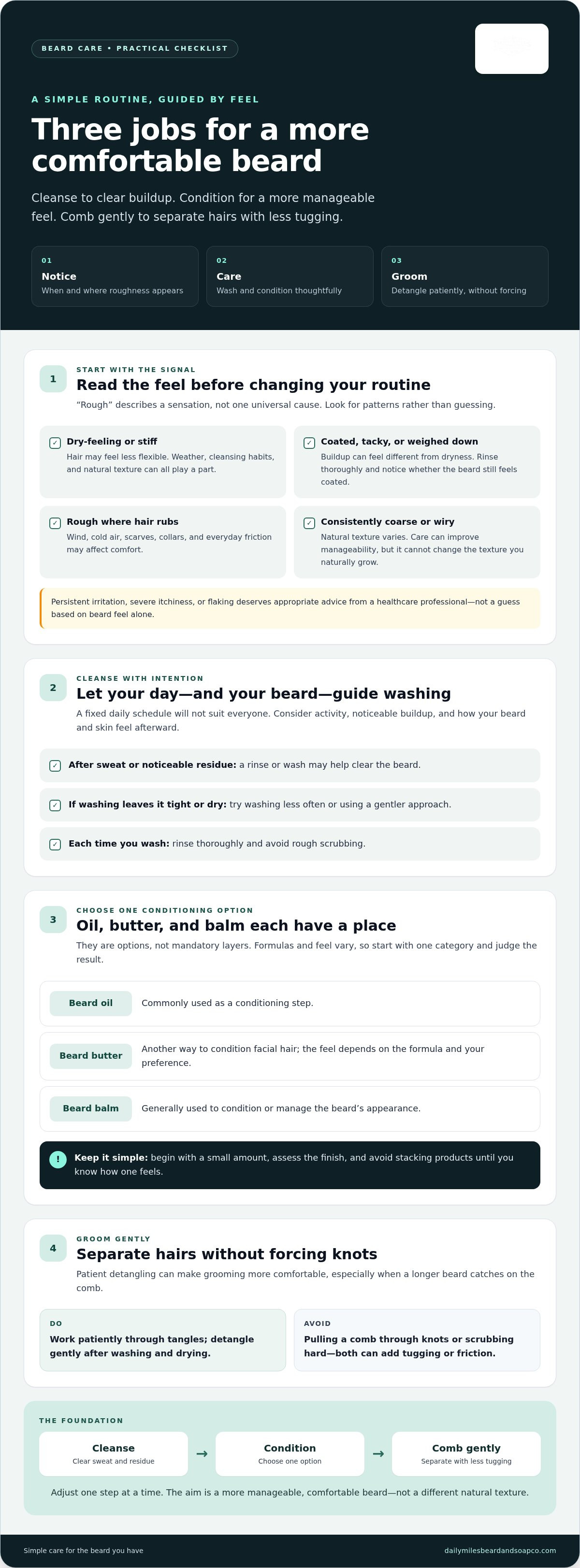
“Rough” describes how your beard feels, not a diagnosis or one universal condition. Some beards naturally grow wiry or coarse. Others feel rougher when they’re dry, exposed to wind and cold, rubbed by clothing, or affected by cleansing habits. Several factors may combine, and texture can vary across the same beard. The overview of The Biology of Beards offers broader background on beard growth and characteristics.
Set a realistic target. Care may make hair easier to manage and more comfortable against your skin, but it can’t change the texture you naturally grow. The aim is to improve how your beard feels, not to chase a silky finish that may not suit its natural structure.
What can make beard hair feel coarse or wiry?
Natural variation is part of the picture. Beard hairs can feel thicker or more rigid than the hair on your head, and no routine makes every beard feel the same. Temporary dryness may add a brittle or scratchy edge. Wind, cold air, frequent rubbing from a scarf or collar, and cleansing that leaves hair feeling stripped can also affect comfort. Notice when the roughness appears and what changed in your routine. That’s more useful than guessing at one cause.
Roughness, dryness, and buildup are not the same thing
Dry-feeling hair may seem stiff or less flexible. Buildup can leave the beard feeling coated, tacky, or weighed down. These clues don’t prove a particular cause, but they can help you choose what to adjust. After washing, rinse thoroughly and let the beard dry gently. Does it feel lighter or still coated? Is it rough throughout, or mainly where it rubs against clothing? Keep track of what you notice, and avoid adding several new products at once.
Pay attention to your skin, too. Persistent irritation, severe itchiness, or flaking deserves appropriate advice from a healthcare professional, rather than a guess based on beard feel alone. For everyday roughness without ongoing skin symptoms, look for patterns: natural texture tends to be consistent, while dryness or residue may change with weather, cleansing, or product use. That gives you a clearer starting point for your routine.
Why Washing, Conditioning, and Grooming Affect Beard Softness
A beard can collect sweat, dust, food, and residue from everyday handling. Cleansing helps remove that buildup, while conditioning and careful detangling can make facial hair easier to manage. Each step has a different job. Washing too often or scrubbing hard may leave hair feeling less comfortable, while too much product can make it feel coated.
Cleansing clears the beard, conditioning supports a more manageable feel, and combing separates hairs with less tugging. That’s the practical foundation for how to soften a rough beard. It won’t change natural hair growth or guarantee a particular texture, but it helps you care for the beard you have.
How beard washing can help or work against softness
Beard wash is for cleansing facial hair, while balm is generally used to condition or manage its appearance. A wash can help remove sweat and residue after a demanding day, but a fixed daily schedule won’t suit everyone. Consider how hard you’ve trained, whether there’s noticeable buildup, and how your beard and skin feel after washing. If you’ve just finished a run, the runner’s beard-care routine offers context for fitting upkeep around exercise. Rinse thoroughly and avoid rough scrubbing. For background on hygiene and beards, see the University of Utah Health’s Health Benefits and Beard Hygiene.
Let comfort guide your adjustments. If cleansing leaves your beard feeling tight or dry, try washing less often or using a gentler approach. If sweat or residue remains after activity, a rinse or wash may help. Ultra Soft Beard Wash can be part of that cleansing step. Choose how often to use it based on your routine and how your beard responds.
What oil, butter, and balm each contribute
Conditioning products are options, not mandatory layers. Beard oil is commonly used as a conditioning step. Beard butter and balm offer other ways to condition or manage facial hair, with differences in feel and preference across formulas. Don’t assume they’re interchangeable or that using all three will work better. Start with one category, apply sparingly, and judge the result by how your beard feels and behaves.
Grooming technique counts, too. Pulling a comb through knots can tug at hair and add friction, especially in a longer beard. Work patiently through tangles instead of forcing the comb. Detangling gently after washing and drying helps keep grooming comfortable. For a straightforward setup, pair a cleansing step with one conditioning option and a beard comb. Explore beard care essentials to find options for everyday upkeep.
Beard Oil, Butter, or Balm: Which Fits a Rough Beard?
The right product depends on what you want it to do, how much hair you’re working with, and how you want your beard to feel afterward. Oil, butter, and balm aren’t interchangeable. One may suit a lighter-feeling routine, while another may fit your preference for added conditioning or help managing facial hair. Formulas vary, so treat each category as a starting point, not a promise about a specific product.
Use this comparison to narrow your options. Pay attention to both your beard and the skin beneath it. If residue bothers you, begin with less and avoid stacking products until you know how one feels.
| Category | General purpose | Typical feel | Routine fit | Consider it when |
|---|---|---|---|---|
| Beard oil | Conditioning step | Often lighter than butter or balm, though formulas differ | Easy to spread through facial hair | You want a straightforward conditioning option |
| Beard butter | Conditioning and manageability | Often richer than oil | May suit a beard that feels dry or needs more coverage | You prefer a more substantial conditioning product |
| Beard balm | Conditioning and beard management | Can feel more substantial; formulas vary | Can fit a routine that includes shaping or managing stray hairs | You want conditioning alongside help managing the beard’s appearance |
When beard oil may suit your routine
Start with a small amount rather than assuming you need a set dose. Warm it between your palms, then spread it through the beard, adjusting for its length and how it feels. If the hair feels coated afterward, use less next time. After Sunset Beard Oil is one option. Judge it by whether its feel and use fit your routine, not by an expectation that it will change your natural hair texture.
When beard butter or balm may be a better fit
Separate the goals: do you mainly want a conditioning step, or do you also want help managing your beard’s shape? Butter and balm may suit different preferences, but neither is automatically right for every beard. Backcountry Beard Butter and Backcountry Beard Balm are options in those categories. Follow the product directions, start sparingly, and notice whether the finish feels comfortable rather than heavy.
Choose by length, finish, and feel. A shorter beard may need less product to cover the hair; a longer beard may take more careful spreading. If you dislike residue, try one product on a normal day before adding anything else. To decide how to soften a rough beard, keep the trial simple: choose one category, use a small amount, and assess the result once it settles.
There’s no universal winner. Pick the product that matches your preference, then keep the routine consistent enough to tell whether it suits you. For a practical starting point, explore beard oil, butter, and balm as distinct tools for everyday beard care.
A Simple Routine to Soften a Rough Beard Day by Day
A workable routine should fit your day, not add another chore. Cleanse when sweat or residue calls for it, dry without rubbing hard, use a conditioning product sparingly, then detangle with care. Give each step a job and adjust based on how your beard feels rather than adding products by default.
- Cleanse as needed. After a sweaty workout or a day outdoors, rinse away sweat and grime. Use beard wash when your beard needs a fuller cleanse, rather than washing automatically when it already feels clean.
- Towel-dry gently. Press a towel against your beard to absorb water. Avoid rough back-and-forth rubbing, which can add friction and make tangles harder to work through.
- Condition with a light hand. Start with a small amount of oil, butter, or balm. Spread it between your palms before working it through your beard.
- Detangle patiently. Use a beard comb to work through knots without forcing it. Move from the ends toward your face, easing through snags as you go.
Adjust the routine to the conditions. After a run, deal with sweat before it sits in your beard. Wind and cold can leave facial hair feeling less comfortable, so notice whether your usual conditioning step feels adequate afterward. If you’re outside only briefly and your beard stays clean, a full wash may not be necessary. Keep the sequence simple. Sustainable beard-care guidance can also help you consider ingredient values when choosing products.
How to apply conditioning products without a greasy finish
Less is a useful starting point. Warm a small amount between your hands, then work it through the beard instead of leaving most of it on the surface. If the hair still feels dry after application, add a little more. If it feels coated or heavy, use less next time. Test one routine change at a time so you can tell what feels comfortable.
How combing and trimming support a more manageable beard
For longer facial hair, separate knots gradually. Start near the ends and work upward toward your face, freeing tangles before combing through the full length. A beard comb is a straightforward tool for this step. Trimming may remove ends that feel rough or snag, but it won’t change your beard’s natural texture. Focus on careful upkeep, not on chasing a different hair type.
Consistency beats layering. Follow the sequence after workouts or when your beard needs attention, and keep the conditioning step modest until you know how it feels through the day. That’s a practical way to approach how to soften a rough beard without turning grooming into a production.
Choose a simple setup for your routine with beard-care essentials for daily upkeep.
Build a Rough-Beard Care Routine That Holds Up to Active Days
A routine earns its place when you can stick with it. Keep the core simple: cleanse when sweat or residue calls for it, dry gently, apply one conditioning product if it suits your beard, then comb without force. After a hard workout, washing or rinsing may be useful; on a quieter day, you may not need the same level of cleansing. Let your activity and comfort guide the adjustment.
Consistency matters more than stacking products. Using several formulas at once makes it harder to tell how your beard responds, and more product isn’t automatically better. Keep the steps that feel useful. Drop what leaves your beard uncomfortable or weighed down.
How to tell whether your routine is working
Track practical signs: does your beard feel comfortable against your skin, is it easier to comb, and does it feel free of unwanted residue? Don’t judge success by expecting naturally coarse hair to become a different texture. Change one part of the routine at a time, then observe how it feels over several uses. If a product causes discomfort, pause it. For persistent irritation, itching, or flaking, seek advice from a healthcare professional.
Active days can call for small changes, not a whole new regimen. If you’ve sweated heavily, cleanse as needed. After time in wind or cold, notice whether your beard feels less comfortable and whether a conditioning step suits it. If your schedule is tight, keep the essentials within reach and avoid turning upkeep into a long process. The same approach works on quieter days: respond to what your beard needs.
Choose products by role, values, and routine
Match the product to the step you want to support. Beard wash is for cleansing; oil, butter, and balm are conditioning or beard-management options with different feels. Choose based on your preference, beard length, and tolerance for residue, not on a promise to change natural texture. Daily Miles Beard & Soap Co creates small-batch beard-care products that are plant-based, vegan, bee-free, and palm-free. Those are brand values, not proof of a particular result.
For a low-fuss routine, start with cleansing as needed, one conditioning option, and gentle combing. Give that setup a fair try before adding more. If it fits after a run, a workday outdoors, or a slower day at home, you’ve found a routine you can maintain. That’s the practical answer to how to soften a rough beard: care for it steadily, without expecting one product to do every job.
Explore Daily Miles beard care to find options for the steps you want in your routine.
Make Your Next Grooming Step Count
A more comfortable beard is built through attention, not a perfect product lineup. Give your routine room to work. Notice how your beard feels after a long day, after washing, and once it’s dry. Then make one practical adjustment and keep the steps that suit your skin, schedule, and preferences.
That’s the real value of learning how to soften a rough beard: you can respond to what your beard needs instead of guessing or piling on products. Natural texture may stay the same, but thoughtful upkeep can help you find a feel and routine that work for you. Keep it simple. Stay consistent. Let comfort guide your next move.
If you’re ready to choose grooming essentials that fit your approach, explore plant-based beard care from Daily Miles. Start with the step you want to support, and build a routine that holds up through the miles ahead.
Frequently Asked Questions
Can trimming make a rough beard feel softer?
Yes, trimming can make a beard feel less scratchy if uneven or damaged-feeling ends catch against your skin or clothing. It won’t change the texture of new growth, so think of it as tidying the feel and shape, not changing the hair itself. If you trim at home, take off a little at a time and reassess instead of cutting too close in pursuit of softness.
How long does it take to soften a rough beard?
There’s no fixed timeline. A beard may feel more comfortable after grooming if residue or tangles were part of the problem, while routine-related changes can take several uses to assess. Natural texture won’t transform, and results vary with your beard and routine. Note what you changed and how your beard feels after washing, drying, and wearing it through a typical day.
Is a rough beard always caused by dryness?
No. Natural hair texture, tangles, friction from a collar, or leftover product can also contribute to a rough feel. Consider whether the sensation is consistent or changes after exercise, washing, or wearing certain clothing. Those observations can help you decide what to adjust first, but they can’t identify a skin condition. If discomfort or irritation persists, get advice from a healthcare professional.
Can hard water make a beard feel rough?
It can be a possibility, though roughness alone doesn’t show that hard water is the cause. If your beard feels different after washing at home than after washing elsewhere, note the pattern and whether residue seems to remain despite rinsing. Avoid making several changes at once. A thorough rinse and a simple routine can help you assess the feel without assuming the water is responsible.
What happens if I use too much beard oil?
Too much oil can leave facial hair feeling greasy, heavy, or coated instead of comfortable. It may also transfer onto your hands, clothing, or pillow. If that happens, use less next time and spread it through the beard rather than concentrating it in one spot. If your beard still feels oily, cleanse it gently instead of adding another product to cover the residue.
Should I apply beard oil to wet or dry hair?
Either can work, depending on what feels manageable in your routine. Applying oil to a towel-dried beard may make it easier to spread, while applying it to dry hair lets you judge the finish more directly. Avoid applying it to a dripping-wet beard, where it may be harder to tell how much you’ve used. Start small and adjust based on the result.