
Beard Feels Like Straw? Causes, Fixes, and a Simple Care Plan
Adding more beard oil isn’t always the fix. If your beard feels like straw, the rough, stiff texture may come from how you wash or dry it, dry air, friction, or a routine that isn’t working for you. Piling on products without addressing the cause can leave your beard greasy without making it easier to manage.
That scratchy, stubborn feel is frustrating, especially when you’re unsure whether to change your wash routine or reach for a balm. A coarse-feeling beard doesn’t automatically point to a medical problem. A few practical adjustments can help you identify what may be contributing and build a routine that fits your day.
This guide covers common causes, how washing habits and weather can affect texture, and ways to adjust your care without overloading your beard. You’ll also learn how beard wash, oil, butter, and balm serve different roles, so you can choose by function and ingredients rather than hype. The goal is a steady, lightweight routine that keeps your beard manageable without a greasy finish.
Key Takeaways
- “Straw-like” describes how your beard feels; it doesn’t identify one specific cause or diagnose a problem.
- If your beard feels like straw, review your cleansing habits and exposure to dry air, wind, sun, and friction before changing products.
- Oil, butter, balm, and wash have different roles. Choose the format that fits your routine instead of layering everything at once.
- Cleanse thoughtfully, dry gently, and try one leave-in product. Change one routine variable at a time and observe the texture over several grooming cycles.
- Daily Miles makes small-batch, plant-based, vegan, bee-free, and palm-free grooming products for active people and outdoor enthusiasts.
Why Does Your Beard Feel Like Straw? Start With the Texture
A beard can look clean and still feel rough, stiff, or difficult to comb. That mismatch can be frustrating, but the sensation alone doesn’t tell you exactly what’s happening. “Straw-like” is a plain-language description of texture, not a diagnosis or proof of one cause. The feeling may reflect grooming habits, outdoor exposure, your natural hair texture, or several factors together.
Start by separating how the hair feels from the condition of the skin underneath. Coarse strands are a grooming observation. Persistent itch, flaking, redness, tenderness, or other visible changes are separate signs to pay attention to. One doesn’t automatically explain the other.
What does a straw-like beard feel like?
People often use “straw-like” to describe strands that feel dry to the touch, wiry, rigid, or rough against the hand. The beard may catch on your fingers or resist being combed into place. These descriptions help you track what you notice, but roughness alone can’t confirm dehydration or a medical condition.
Length and curl pattern matter. Longer strands can bend, rub against clothing, and feel more unruly, while tightly curled hair may feel coarse even when clean. Individual texture varies, too. The visible strand is the hair shaft, which grows from a hair follicle beneath the skin. How that shaft feels is only one part of the picture, not a direct measure of what’s happening at the skin or follicle.
When is roughness more than a grooming issue?
Check whether the skin is also persistently itchy, painful, red, flaky, or visibly changing. Notice whether symptoms are getting worse or continuing despite a simple routine. Rough-feeling hair without other symptoms is different from ongoing skin irritation, and this article can’t diagnose either. If skin symptoms persist or worsen, seek advice from a qualified medical professional.
Keep that distinction clear. Beard-care products are grooming choices, not a way to diagnose or treat a skin condition. If you’re tracking texture, note when the beard feels rough and whether the skin feels normal or irritated. This gives you a clearer starting point before you adjust your routine.
In short: Straw-like texture is a description, not an explanation. Hair type, grooming habits, and environmental exposure can interact, so don’t assume one cause from feel alone. Look at the hair and skin separately. That simple check helps you decide whether you’re observing a texture issue or should seek guidance about persistent skin symptoms.
What Makes Beard Hair Feel Dry, Coarse, or Stiff?
Once you’ve noticed a change in texture, look for what changed around the same time. A different washing pattern, windy weather, or more time in outdoor gear may offer clues, though none proves a cause on its own. Beard texture can shift with several habits and conditions overlapping, so look for patterns before making a big change.
How washing and product buildup can change beard texture
Frequent cleansing or a wash that leaves your beard feeling stripped may make the hair feel less comfortable. That doesn’t mean washing is the problem for everyone. Sweat, dust, and outdoor activity can make cleansing part of your day. Pay attention to how your beard feels afterward and how often you reach for a cleanser.
Review a few details:
- Frequency: Are you washing your beard more often than your routine requires?
- Water temperature: Does hot water leave the hair feeling less comfortable afterward?
- After-wash feel: Does your beard feel clean and flexible, or unusually rough and stripped?
Residue can create a different kind of stiffness. If you’re layering several leave-in products, your beard may feel coated, heavy, or harder to comb rather than soft. Notice whether that sensation appears after applying products and whether it eases when you simplify. A dedicated beard wash, such as Ultra Soft Beard Wash, is one option to consider as you review your cleansing routine. Choose based on the role you need it to play, not on the assumption that more product means softer hair.
How weather, friction, and natural hair texture play a part
Outdoor conditions can contribute to how your beard feels. Low humidity may leave hair feeling less comfortable, while wind can rough up strands or tangle them. Sun exposure and repeated rubbing can also affect texture. A collar, helmet strap, scarf, or other gear may press and drag against the same area throughout the day. These are possible contributors, not guaranteed explanations.
Your baseline matters, too. Curly hair may catch or tangle differently from straighter hair. A dense beard can feel bulkier, and longer strands have more contact with clothing and equipment. Those features don’t mean anything is wrong; they can simply shape what “coarse” feels like for you.
Track the timing rather than guessing. Note whether your beard feels rougher after a wash, after a day outside, or where it rubs against gear. If it feels coated after applying products, record that as a separate clue. A brief note about your routine and conditions can help you spot a pattern before changing several things at once.
If product layering seems to be part of the issue, explore beard-care options from Daily Miles by their routine role. Make the next adjustment measured and specific. One clear change is easier to assess than several new products at once.
Beard Oil, Butter, Balm, or Wash: Which Change Fits the Problem?
Choose by the job your routine needs done. Wash cleanses; leave-in products serve conditioning or styling roles. They aren’t interchangeable, and using several at once can make it harder to tell what’s helping or leaving your beard coated.
Decision rule: If your beard feels stripped after washing, review the cleanser first. If it feels clean but you want a leave-in step, choose one format based on whether you prefer oil, conditioning butter, or a styling balm.
| Format | Routine role | Consider it when |
|---|---|---|
| Beard wash | Cleansing step, rinsed out | You’re reviewing how your beard feels after washing. |
| Beard oil | Leave-in care for the skin beneath the beard and the hair | You want an oil format as your single leave-in step. |
| Beard butter | Leave-in conditioning format | You prefer butter to oil or want a conditioning-focused format. |
| Beard balm | Leave-in format with a styling role | You want conditioning alongside help shaping your beard. |
What does beard oil do in a basic routine?
Beard oil is a leave-in category used as part of care for the skin beneath the beard and the hair itself. It doesn’t replace cleansing, and no format guarantees a particular texture. Start with a modest amount, spread it through the beard, then adjust based on length and how it feels. For an example of how oil can fit an active schedule, explore the runner’s beard care routine.
When might butter, balm, or a gentler wash make more sense?
Butter is a distinct conditioning format; balm adds a styling role. Wash belongs in the cleansing step, not in place of leave-in care. If your beard feels uncomfortable after cleansing, consider the wash before adding another layer. If it feels clean but you want a leave-in, choose one format and assess it on its own.
Daily Miles offers After Sunset Beard Oil, Backcountry Beard Butter, Backcountry Beard Balm, and Ultra Soft Beard Wash across these routine roles. The names identify the formats, not a guaranteed outcome. Make one measured change, then notice whether your beard feels lighter, more manageable, or more coated. That feedback can help you decide whether to keep the adjustment or try a different role.
If ingredient preferences matter to your choice, Daily Miles takes a plant-based, vegan, bee-free, and palm-free approach. Browse its beard-care products by format and keep your routine focused on the job you want each product to do.
How to Make a Straw-Like Beard Feel More Manageable
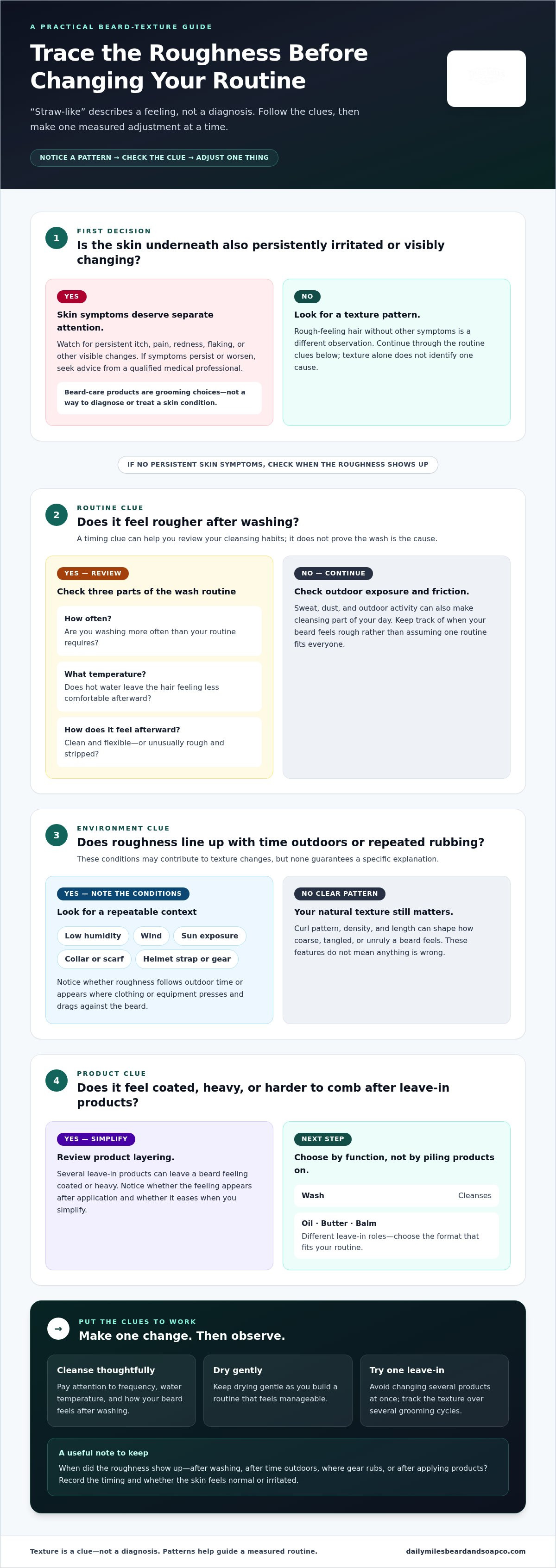
Keep the reset simple. Don’t overhaul your whole routine at once. A measured sequence helps you see whether cleansing, drying, or your leave-in choice is affecting how your beard feels. If your beard feels like straw, make one practical adjustment and pay attention before adding another.
A simple wash-and-condition sequence
Use beard wash when cleansing fits your routine. There’s no single schedule that suits everyone. Rinse thoroughly, then pat your beard dry with a towel instead of rubbing hard. While it’s still slightly damp or fully dry, apply a small amount of one leave-in format. Start modestly, especially if you’ve noticed a coated or heavy feel.
- Cleanse thoughtfully. Choose a wash step that suits your routine, and notice how your beard feels afterward.
- Dry with care. Press the towel gently against the beard rather than scrubbing the strands.
- Apply one leave-in. Use a small amount of oil, butter, or balm, not all three at once.
- Assess before adjusting. Give that routine a fair try before changing the amount or format.
Consistent, measured use is easier to assess than layering several products because you can tell which change may be affecting the feel. For help thinking through ingredient preferences and product choices, use this sustainable beard care guidance as context, then keep your routine focused on what you want it to do.
How to tell whether your routine is helping
Make a brief note after grooming. Record whether the beard feels rough, manageable, or coated, and whether your skin feels comfortable. Include anything that changed that day, such as washing or time outdoors. You don’t need a complicated tracking system. A few words can make patterns easier to spot and help you avoid changing several parts of your routine at once.
- Texture: Does the hair still feel stiff, or is it easier to comb?
- Residue: Does a leave-in feel light, or does it seem to sit on the beard?
- Skin comfort: Does the skin feel as usual, or has discomfort appeared?
If an adjustment leaves unwanted buildup or discomfort, pause it rather than adding another product to cover the sensation. Return to the simplest routine that feels comfortable, then reassess before trying a different format. Outdoor routines can involve their own practical considerations; this outdoor beard grooming advice offers activity-specific context for days spent on the move.
For a focused next step, explore Daily Miles beard-care products by their role in your routine. One change at a time gives you a clearer read on what suits your beard and daily habits.
Build a Practical Beard-Care Routine With Daily Miles
A workable routine starts with observation, not a crowded shelf. Identify what you notice: rough strands, a coated feel, or discomfort after washing. Review your recent habits and conditions, then make one measured change. If your beard feels like straw, this process helps you respond to the texture you experience instead of assuming every beard needs the same product.
Daily Miles Beard & Soap Co makes small-batch grooming products with a plant-based, vegan, bee-free, and palm-free approach. The beard-care range includes oil, balm, butter, wash, and combs. Each has a different place in a routine. Choose by function and personal ingredient preferences, not by promises that a product will fix every cause of roughness.
Match a Daily Miles product category to your routine
Use the product format that fits the task. Beard wash is the cleansing step. Beard oil is a leave-in option; beard butter is another conditioning format. Balm has a styling role. A beard comb is a grooming tool for working through and arranging the hair. These categories serve different purposes, so you don’t need to use them all together.
For example, if your main concern is how cleansing fits your routine, consider a wash such as Ultra Soft Beard Wash. If you’re looking for a leave-in format, choose between After Sunset Beard Oil, Backcountry Beard Butter, and Backcountry Beard Balm based on whether oil, butter, or a styling-oriented balm suits your preference. A comb can be part of grooming without being treated as a conditioning product. Product names describe the offerings, not a guaranteed result.
Keep the routine consistent, ethical, and uncomplicated
Start with steps you’ll use consistently: cleanse when needed, dry gently, and select one leave-in format if it fits your routine. Note how your beard feels and whether you notice residue or skin discomfort. Keep the rest steady while you assess. If a change brings unwanted buildup or discomfort, pause it rather than stacking on more products.
A simple routine is easier to maintain and assess than a lineup of products added all at once. Daily Miles’ vegan, bee-free, and palm-free approach may also suit shoppers looking for those values in their grooming choices. Those preferences are separate from product function, so let the role of each format guide how it fits into your routine.
Ready to choose by routine role? Explore the Daily Miles beard-care range and find a straightforward place to start.
Keep Your Beard Routine Built for the Long Run
Your beard doesn’t need a complicated overhaul. It needs a routine you can stick with and adjust as your needs change. If your beard feels like straw again after a change in weather, a new training schedule, or a shift in grooming habits, treat that as a cue to reassess, not a reason to pile on products. Small, deliberate adjustments are easier to live with and learn from.
Good grooming is personal. The right setup is one that fits your beard, your skin’s comfort, and the demands of your day. Choose products for the role they serve and the values you want to support, then give your routine room to settle. No hype required, just steady care and attention.
Ready to choose your next step? Explore Daily Miles beard-care products and find a practical fit for your routine. Keep it consistent and let your beard care work with the life you lead.
Frequently Asked Questions
Why does my beard feel like straw after washing?
Your beard may feel rough after washing because the cleanser, water temperature, or drying method doesn’t suit your routine. For example, a hot shower followed by vigorous towel rubbing can leave strands feeling harsher than before washing. Try changing one part, such as using cooler water or patting the beard dry, and compare how it feels next time. If discomfort is on the skin, track that separately.
Can hard water make your beard feel rough?
Hard water may contribute to a rough or coated feel for some people, but it isn’t the only possible explanation. If the texture seems worse after washing at home and different elsewhere, water conditions could be one clue. Notice whether your skin or hair also feels coated, and consider whether residue or a change in cleanser could explain it. Don’t assume hard water is the cause from texture alone.
Is beard oil or beard butter better for a dry-feeling beard?
Neither format is automatically better; choose based on the feel and use you prefer. Beard oil is a liquid leave-in, while beard butter is a separate conditioning format. If your beard feels dry but products often seem heavy, begin with a small amount of one format rather than combining them. Give yourself time to assess how it feels before switching or adding another step.
How often should I wash my beard if it feels coarse?
There isn’t one washing schedule that fits every beard. Consider how much sweat, dust, or food your beard picks up, and whether it feels uncomfortable after cleansing. After a sweaty workout, for example, you may want to rinse or cleanse, while a low-activity day may call for less. Let your beard’s condition and your day guide the choice rather than washing by habit alone.
Can sweat and outdoor activity make beard hair feel dry?
Sweat and outdoor activity can change how your beard feels, though they don’t prove the hair is dry. Sweat, dust, wind, and rubbing from a neck gaiter or jacket collar may leave strands feeling rough or tangled. After a long run or trail day, notice whether the change appears before or after washing. That timing can help you identify whether cleansing, exposure, or friction deserves attention.
What should I do if my beard still feels rough after changing my routine?
If roughness continues, review what you changed and whether another factor has stayed the same, such as frequent cleansing or friction from gear. Keep notes on texture and product residue, then avoid adding several new steps at once. If the skin also has persistent or worsening irritation, pain, redness, or visible changes, seek advice from a qualified medical professional. Grooming adjustments aren’t a substitute for medical guidance.
Does a straw-like beard mean my skin is dehydrated?
No. A straw-like feel by itself doesn’t show that your skin is dehydrated or identify a medical cause. Hair texture can be influenced by its natural pattern, length, grooming habits, and surrounding conditions. Pay attention to the skin separately: ongoing tightness, irritation, or visible changes are different from coarse-feeling hair. If skin symptoms persist or worsen, ask a qualified medical professional for advice rather than relying on grooming products to diagnose them.
Read more
More product isn’t always the fix for a beard that feels rough, stiff, or ready to snap. If you’re wondering what to do for a dry brittle beard, start by reviewing the routine and conditions it fac...
A rough beard doesn’t need a miracle product. It needs a routine that fits what your beard actually needs. If your hair feels coarse, wiry, or uncomfortable against your skin, washing habits, dry w...