
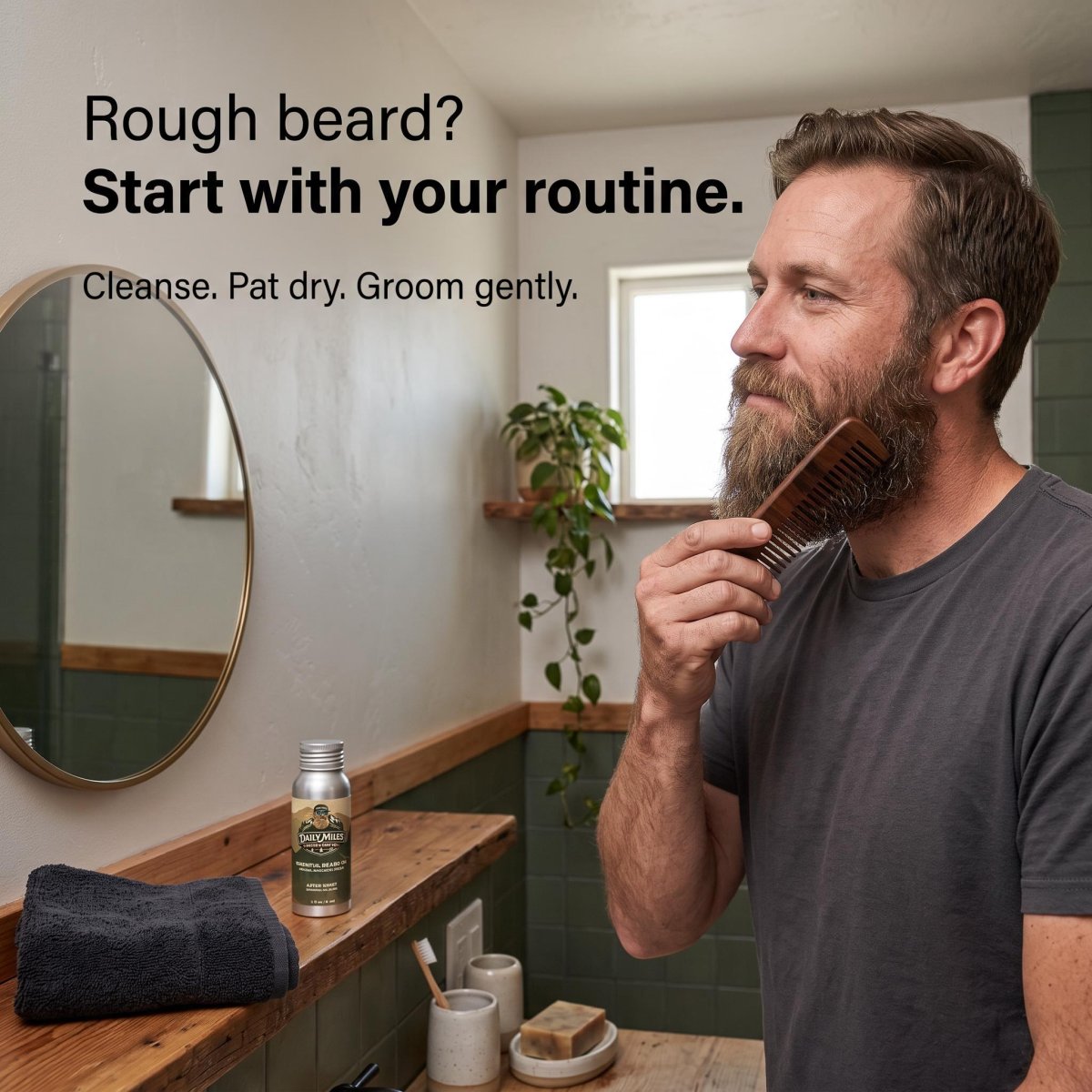
Fixing a Dry, Brittle Beard: A Practical Recovery Plan
More product isn’t always the fix for a beard that feels rough, stiff, or ready to snap. If you’re wondering what to do for a dry brittle beard, start by reviewing the routine and conditions it faces each day, not by piling on another layer. Washing habits, weather, and friction from grooming can all play a part.
That brittle feel is frustrating, especially when you can’t tell whether it starts with your wash, the air around you, or your styling routine. A few deliberate adjustments can help reduce avoidable stress without leaving your beard heavy or your skin uncomfortable.
This guide offers a practical routine for washing, drying, and conditioning, and explains the different roles of beard wash, oil, balm, and butter. It also covers what to look for on product labels and when persistent dryness, irritation, or breakage calls for professional advice. Keep it simple: make one change at a time, then pay attention to how your beard and skin respond.
Key Takeaways
- Roughness and breakage are signs to observe, not a diagnosis. Handle your beard gently and pause products or habits that may irritate your skin.
- Washing frequency, rough handling, heat styling, weather, and friction may contribute to a brittle feel. Review your routine and exposure before adding products.
- Choose grooming products by their role: wash to cleanse, oil as a leave-on grooming step, and balm or butter as other formats to compare.
- Keep your routine simple: cleanse as needed, dry gently, and groom lightly. Change one thing at a time so you can track how your beard and skin respond.
- Notice changes in texture, breakage, and skin comfort without expecting a fixed recovery timeline. Seek professional advice if skin or hair changes persist.
Dry, Brittle Beard: Start by Reading the Signs
Begin with what you can see and feel. If a product or habit seems to irritate your skin, pause it while you simplify your routine and observe what changes. Roughness, a dry feel, and strands that snap are clues to describe, not proof of a specific cause.
Beard brittleness is a noticeable loss of flexibility in beard hairs, so they feel rough or stiff and may break more easily during ordinary grooming. Dry-feeling hair and brittleness can overlap, but they aren’t identical observations. Your beard may feel coarse without obvious breakage, or you may notice broken strands even when the skin beneath feels comfortable. Neither sign alone explains why it’s happening.
Hair is made largely of keratin, and individual hairs also move through growth cycles. This background on Hair structure and growth cycles can help explain why a strand’s appearance doesn’t tell the whole story. Beard texture varies, and changes can have more than one contributor. Treat a change as a reason to pay attention, not as a reason to diagnose yourself.
How can you tell if your beard is dry or brittle?
Notice how your beard feels when you run clean fingers through it or comb it as usual. Does it catch, feel rough along the length, or seem stiff at the ends? Look for short, uneven pieces, especially after grooming. Shed hairs and broken hairs are different observations, though appearance can be hard to interpret on its own.
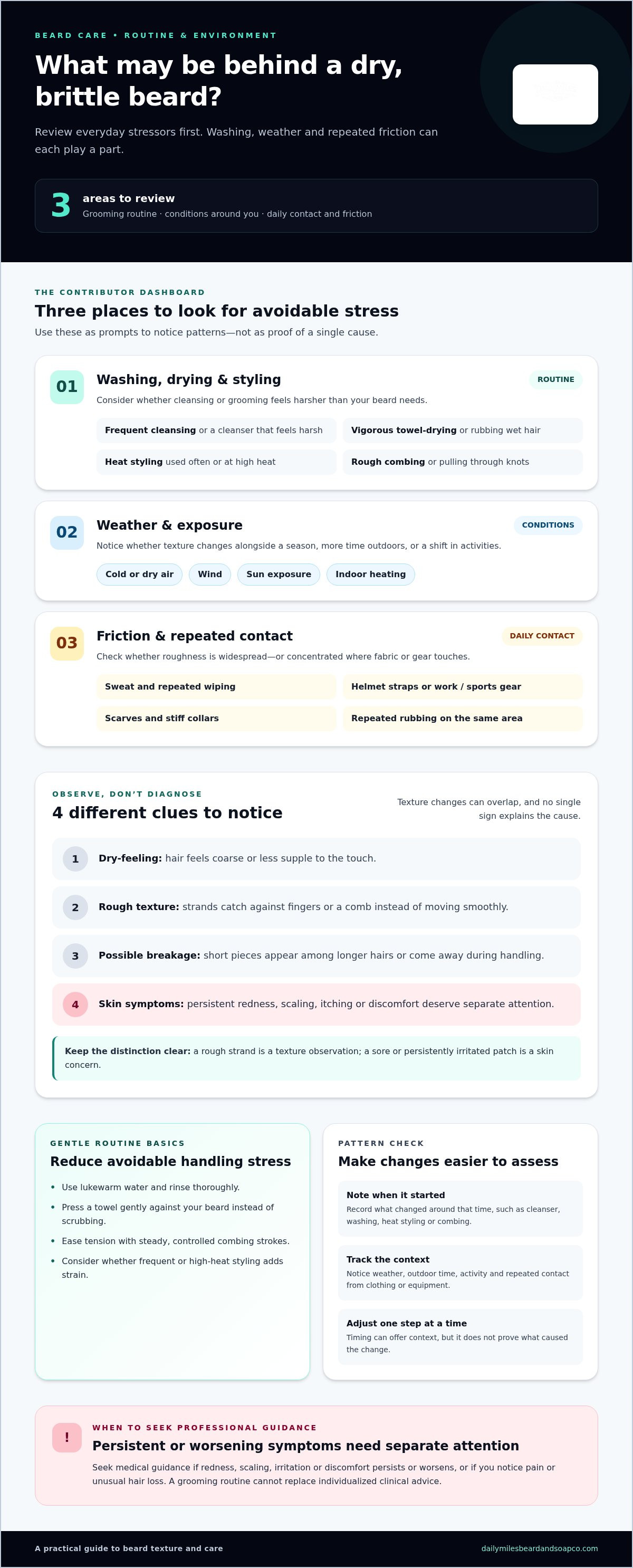
- Dry-feeling: Hair feels coarse or less supple to the touch.
- Rough texture: Strands catch against your fingers or comb instead of moving smoothly.
- Possible breakage: Short pieces appear among longer hairs or come away during handling.
- Skin symptoms: Persistent redness, scaling, itching, or discomfort deserve separate attention.
Write down when you first noticed the change and what shifted around that time. A new cleanser, more frequent washing, heat styling, or rougher combing may be relevant, but timing doesn’t prove cause. If you’re deciding what to do for a dry brittle beard, those notes provide a clearer starting point than changing several products at once.
When should beard or skin symptoms get professional attention?
Seek medical guidance if redness, scaling, irritation, or discomfort persists or worsens, or if you notice pain or unusual hair loss. A grooming routine can support everyday care, but it can’t replace individualized clinical advice or identify the reason for ongoing symptoms.
Keep the distinction clear: a rough strand is a texture observation, while a sore or persistently irritated patch is a skin concern. If symptoms continue despite simplifying your routine, don’t keep experimenting with products instead of seeking professional guidance. Bring notes about the changes you’ve seen and the care habits you’ve adjusted. That gives a clinician useful context without assuming a diagnosis.
Why Beards Become Dry and Brittle: Routine, Weather, and Friction
There isn’t one explanation for every rough or brittle beard. Washing, drying, styling, weather, and repeated contact may each contribute, alone or together. Look for patterns in your own routine rather than treating one clue as proof. If your beard feels different after you start using a new cleanser, for example, review that change without assuming it is the cause.
Frequent cleansing, harsh products, vigorous towel-drying, heat styling, cold or dry air, wind, sun exposure, sweat, and friction from clothing or gear can all add stress to beard hair and the skin beneath it. Use this as a checklist, not a verdict. Your grooming needs may shift with your activity, skin comfort, and outdoor conditions.
Can washing and drying habits leave beard hair feeling rough?
They may. Washing more often than your beard needs, or using a cleanser that feels harsh on your skin, can leave your beard feeling less comfortable. There’s no universal washing frequency: consider how much you sweat, what your day involves, and how your skin feels after cleansing. Use lukewarm water, rinse thoroughly, and press a towel gently against your beard instead of scrubbing. If you use heat styling, consider whether frequent or high-heat use could be adding strain.
Pay attention to the whole process, not just the cleanser. Pulling a comb through knots, rubbing wet hair briskly, or repeatedly shaping your beard with heat can make grooming rougher than necessary. Ease up on tension and use steady, controlled strokes. Small adjustments are easier to assess than changing every step at once.
How can weather, sweat, and daily friction affect beard texture?
Cold, dry air and wind can leave exposed hair feeling less comfortable, while sun exposure may be another source of environmental stress. Indoor heating can also make winter air feel dry. These conditions don’t affect everyone in the same way, so note whether a change in texture lines up with a new season, more time outdoors, or a shift in your usual activities.
Activity brings its own variables. Sweat, repeated wiping, and a helmet strap rubbing the same patch can add contact and friction. A scarf or stiff collar may catch on longer hairs; sports or work equipment can press against your beard during an outing or session. Afterward, notice whether the roughness is widespread or concentrated where gear or fabric touches. For more on managing facial hair outdoors, see this outdoor beard grooming guidance.
Keep the record simple: note the weather, washing and styling habits, and any repeated rubbing from clothing or equipment. This can help you spot a pattern without assuming one factor is responsible. If you’re reviewing what to do for a dry brittle beard, adjust one likely source of stress at a time. For a routine built around beard wash, oil, balm, or butter, explore Daily Miles beard-care options and compare their roles with the steps you already use.
How to Choose Beard Care for Dry, Brittle Hair
Choose products by the job they do, then check how your beard and skin respond. Beard length, skin comfort, and how much shaping you prefer can all affect which format suits your routine. More products aren’t automatically better. Start with the role you need, follow label directions, and don’t assume every formula in a category feels or behaves the same.
| Product type | General routine role | Consider it if |
|---|---|---|
| Beard wash | Cleanses beard hair and the skin beneath it. | You want a cleanser intended for beard care. |
| Beard oil | A leave-on grooming step for the beard. | You prefer an oil-format product in your routine. |
| Beard balm | A grooming option that can help shape the beard. | You want to compare a balm format for styling. |
| Beard butter | A separate leave-on grooming format to compare with oil or balm. | You prefer to assess its texture and directions for your beard. |
What is the difference between beard oil, balm, and butter?
Oil is a leave-on category, while balm and butter are different formats to compare. Don’t assume balm will provide a particular level of hold or that butter will feel a certain way; formulas vary. Consider your beard length, how much shaping you like, and whether a product feels comfortable on your skin. Check the current label for ingredients and directions before use.
For a simple comparison, choose one leave-on product rather than layering several at once. Use it according to its directions, then notice whether the amount and feel work with your usual grooming. This won’t prove that a product has repaired brittle hair. It helps you decide whether that format suits your routine and preferences.
What should you look for in a beard wash?
Choose a cleanser intended for beard care and follow its current directions. Read the ingredient list rather than relying on category names or assumptions about what a formula contains. If a wash consistently leaves your skin uncomfortable, pause it and watch for changes. Persistent or worsening symptoms call for professional guidance, not more product trials.
Working out what to do for a dry brittle beard means making deliberate choices, not collecting products. A plant-based, vegan, bee-free, and palm-free beard-care range may suit readers who value those formulation principles, but those labels don’t guarantee a particular result for your hair or skin. Compare each product’s purpose with your needs and follow its directions.
For another way to assess product choices and formulation priorities, explore this guide to sustainable beard care products. A focused routine can start with one suitable cleanser and one leave-on grooming option. Explore beard-care products by category to compare the available formats.
A Simple Routine to Help a Brittle Beard Feel More Manageable
Build a routine you can repeat without turning grooming into another hard job. Start with the basics: cleanse when your beard needs it, dry without rough friction, and groom with a light hand. Follow the label directions for product amounts and frequency. Change one part at a time so you can tell what feels comfortable and what doesn’t.
- Cleanse as needed. Consider sweat, dirt, activity, and skin comfort rather than following a fixed schedule. Use a cleanser intended for beard care and follow its directions. Rinse thoroughly.
- Dry gently. Press a towel against your beard to absorb water. Avoid vigorous rubbing, which can tug at strands and add friction. Let your beard dry comfortably before moving to the next step.
- Groom lightly. Ease through tangles with your fingers or a beard comb. If a leave-on product fits your routine, use it according to its label. Don’t force a comb through a snag or layer several unfamiliar products at once.
That’s a workable baseline, not a promise of repair. Beard care can support a more deliberate routine, but it can’t guarantee softness or reverse damage. The practical goal is to reduce avoidable pulling and track what your beard and skin tolerate.
What does a low-friction daily beard routine look like?
Keep daily grooming simple. Check for tangles before combing, then work through them patiently rather than pulling from the roots or ends. Use a leave-on product only if you want that step and its directions suit your routine. Stick with familiar products while you observe changes. If you want to assess a new option, introduce it on its own rather than changing your cleanser and styling products at the same time.
How should you adjust care after outdoor activity?
After a run, ride, or long day outside, decide whether to rinse or cleanse based on sweat, soil, and your comfort. There’s no single rule for every outing. Pat your beard dry carefully, then apply a leave-on grooming product only if it fits your routine and label directions. For activity-specific ideas, see the runner's beard care routine.
To get a clearer read on what helps, note your routine and how your beard feels after grooming. Give each adjustment time to assess before making another. If a product repeatedly leaves your skin uncomfortable, pause it and consider professional advice if symptoms persist or worsen. If plant-based options fit your preferences, explore plant-based beard care and compare product roles and current directions before choosing a step.
When to Reassess Your Beard Routine and Take the Next Step
A routine change is useful only if you can tell how it affects you. Track the details that matter: beard texture, visible breakage, skin comfort, and what you changed. Don’t expect an overnight transformation or use a fixed recovery deadline. The aim is to notice patterns and make sound decisions, not judge progress by one day.
How can you tell whether a routine change is helping?
Keep a brief log of the products and grooming steps you use, along with anything that may affect your beard, such as a shift in outdoor exposure, more frequent styling, or repeated contact with gear. Note whether your beard feels easier to comb, whether you see fewer broken strands, and whether your skin feels comfortable. These are observations, not proof that a product caused a change.
Where practical, adjust one factor at a time. If you change your cleanser, styling habits, and leave-on products all at once, it’s harder to know what made a difference. If a product appears to trigger irritation, stop using it. If discomfort persists or worsens, or you notice ongoing redness, scaling, pain, or unusual hair loss, seek medical advice. Don’t keep testing grooming products to explain persistent symptoms.
If your routine feels crowded, simplify it. Return to familiar steps and avoid adding several unfamiliar formulas while you’re trying to understand a change. Follow product directions and look for a pattern without setting an arbitrary deadline. Your beard may feel more manageable even if its texture hasn’t changed dramatically. Comfort and reduced snagging are useful things to note, not guarantees of repair.
How can a plant-based grooming routine fit your needs?
Choose by function and preference. Beard wash is a cleansing option; beard oil, balm, and butter are separate grooming formats to compare based on your routine, beard length, skin comfort, and styling preferences. Daily Miles Beard & Soap Co makes beard wash, oils, balms, and butters in small batches with plant-based, vegan, bee-free, and palm-free formulations. Those attributes describe the products, not a medical effect or promised result. Check each product’s current ingredient list and label directions, since formulas and instructions can differ.
Keep the distinction clear: consistent grooming can support everyday beard care, but it can’t diagnose or treat a medical problem. If your hair or skin changes persist, worsen, or include pain or unusual hair loss, professional evaluation is the next step. For everyday grooming options that fit your preferences, explore Daily Miles beard care.
Build a Beard Routine You Can Keep
The best next step is one you can maintain through ordinary days and demanding ones. Pick a simple point in your existing routine to pause and check how your beard feels, such as after washing or before heading outdoors. That small check-in can help you decide whether your approach still fits without turning every rough patch into a reason to overhaul everything.
Keep your expectations grounded. Grooming is ongoing care, not a test you pass or fail, and no product can promise to fix every cause of brittleness. If you’re still considering what to do for a dry brittle beard, favor choices that feel manageable and suit your preferences. Let comfort, consistency, and professional advice when needed guide your next move.
For beard-care options that fit a deliberate routine, explore Daily Miles beard care. Choose with care, keep your routine practical, and give yourself room to adjust.
Frequently Asked Questions
Can a dry, brittle beard become soft again?
It may feel more manageable with gentler handling and routine changes, but results vary. If you’re deciding what to do for a dry brittle beard, remember that a product can’t make existing damage disappear. Focus on limiting further stress while new hair grows. Notice whether strands snag less during combing or your beard feels easier to manage. Persistent skin symptoms or unusual hair loss call for professional advice, not just grooming adjustments.
How often should I wash a dry beard?
There’s no single washing schedule that suits every beard. Consider how active you’ve been, whether you’ve sweated or picked up dirt, how your skin feels, and what the cleanser label recommends. For example, a muddy outdoor day may call for a wash, while a quiet day may not. Avoid aggressive scrubbing and water that feels uncomfortably hot. If washing repeatedly leaves your skin irritated, reassess the cleanser and simplify your routine.
Can beard oil fix brittle hair?
No. Beard oil is a grooming product, not a guaranteed repair treatment. It may fit your leave-on routine, but how it feels depends on its formula, label directions, and your beard and skin. Check the current product label, and stop using it if irritation occurs. Oil is only one part of care: pulling at knots or frequent heat styling may still add stress, so consider those habits too.
Does trimming help a brittle beard?
Trimming can remove visibly split or uneven ends and help shape your beard, but it won’t change the condition of hair closer to the skin. Avoid cutting aggressively in an attempt to solve the underlying issue. If breakage appears extensive or sudden, or comes with persistent skin changes, speak with a qualified health professional. A trim can change appearance; it can’t identify why the texture or breakage changed.
Can heat styling make a beard brittle?
Frequent or high-heat styling may add stress to facial hair, particularly if you also brush roughly or pull through tangles. Try reducing heat and easing up on tension while you observe your beard’s response. Follow the styling tool’s instructions, including its guidance about damp hair. If the texture remains changed, consider other factors such as washing habits, products, or repeated friction from clothing and equipment.
When should I see a doctor about a dry, brittle beard?
Seek professional advice if dryness or breakage persists despite gentler care, or if you notice ongoing redness, scaling, discomfort, sudden hair loss, or other concerning changes. Beard products support grooming; they aren’t medical treatments and can’t determine what’s causing symptoms. A clinician can assess your individual situation and advise whether further evaluation or care is appropriate. Don’t rely on repeated product changes to address persistent or worsening symptoms.
Read more
You finish a hard run or a long day outdoors, and sweat, sunscreen, and trail dust come with you into the shower. The right natural soap for active men should fit that real routine, not just look c...

Adding more beard oil isn’t always the fix. If your beard feels like straw, the rough, stiff texture may come from how you wash or dry it, dry air, friction, or a routine that isn’t working for you...