

How to Protect Your Beard From Sun and Wind: The Athlete’s Guide
Your beard is not a cosmetic choice. It is a piece of performance gear. Just like your bike or your boots, it requires intentional maintenance to survive the elements. If you spend hours on the trail, you know the grit. You know the sting of windburn and the way UV rays turn healthy hair into brittle straw. Learning how to protect beard from sun and wind is the difference between a resilient mane and a painful recovery. You shouldn't have to choose between a long-distance run and a healthy beard.
We understand the demands of high-mileage pursuits. You need protection that doesn't feel heavy or trap sweat. This guide will show you how to master the essential rituals to shield your facial hair from environmental damage. We will break down the science of UV exposure and the power of bee-free, plant-based barriers. From pre-ride prep to post-trail recovery, you will learn to maintain a soft, durable beard that survives the miles. It's time to treat your grooming like your training. Simple. Disciplined. Effective.
Key Takeaways
- Understand the mechanical damage of UV rays and wind. Learn how environmental stress breaks down keratin proteins and strips essential moisture from your facial hair.
- Master how to protect beard from sun and wind by applying a high-performance beard oil to damp hair before every outdoor pursuit.
- Prioritize breathability with bee-free, plant-based waxes. Avoid heavy animal fats that trap sweat and heat against your skin during intense physical efforts.
- Commit to a post-run recovery discipline. Rinse away salt crystals immediately and use a dedicated face and beard soap to maintain your skin's natural pH balance.
- Equip yourself with tools forged for endurance. Small-batch, artisan products provide the resilience needed for high-mileage days and intentional recovery.
Understanding Environmental Stress: How Sun and Wind Damage Facial Hair
The outdoors is a testing ground. For the high-mileage athlete, the environment is a constant variable that dictates performance. Your beard is part of that equation. It acts as a natural shield, but it is not invincible. Exposure to the elements causes cumulative damage that can't be ignored. Understanding how to protect beard from sun and wind begins with acknowledging the mechanical and chemical stressors of the trail. Sunlight and high-velocity wind don't just sit on the surface. They penetrate the hair shaft. They strip your resilience.
The Impact of UV on Beard Pigment and Strength
UV radiation is a silent aggressor. It doesn't just burn the skin; it destroys the keratin proteins that give your beard its structure. When these proteins break down, the hair becomes porous and weak. You might notice "photo-bleaching," where your beard loses its natural pigment and takes on a lighter, washed-out appearance. This process, often referred to as sun damage to hair, is a sign of structural failure. Photo-degradation is the chemical breakdown of the hair's molecular structure caused by light, which directly compromises the beard's elasticity and overall tensile strength. This oxidative stress leads to brittle ends that snap under the slightest pressure.
Windburn and Mechanical Friction on the Trail
Wind is a mechanical abrasive. On a long ride or a fast descent, high-velocity air acts like sandpaper against your facial hair. It creates microscopic tears in the hair cuticle. These tears allow moisture to escape, leading to chronic dryness. Wind exposure is a primary driver of split ends and tangles. It doesn't stop at the hair. The skin beneath your beard is also at risk. Windburn strips the natural sebum that protects your face, leading to painful chafing and inflammation. A "crunchy" beard texture is the final warning sign. It indicates extreme lipid loss. Your hair has lost its protective oil coating and is now vulnerable to every gust.
Salt from sweat makes the situation worse. As you push through the miles, salt crystals accumulate on the hair shaft. These crystals act as tiny magnifying glasses under the sun. They accelerate dehydration and increase friction between individual hairs. Without a strategy to mitigate these forces, your beard will fail before you reach the finish line. Protection is a discipline. It requires the right tools and a consistent ritual. You don't leave your hydration to chance. Don't leave your beard protection to chance either.
Pre-Exposure Shielding: 5 Steps to Armor Your Beard
Armor up. Preparation is the first mile of any journey. To master how to protect beard from sun and wind, you must establish a pre-ride or pre-run ritual. It isn't about looking good. It is about durability. You are building a shield against environmental attrition. Neglecting this step leads to the "crunchy" texture and split ends that sideline your progress.
Follow these five steps for total protection:
- Start with a clean slate. Use a sulfate-free wash like Ultra Soft Beard Wash. Harsh detergents strip the very oils your hair needs to remain flexible. You need your natural defense intact before adding more.
- Apply oil to damp hair. Water provides the hydration. Oil provides the sealant. Massage it into the skin and hair follicles immediately after your shower to lock in moisture before the air can steal it.
- Layer with a plant-based balm. This creates a physical barrier. It protects the surface of the hair from mechanical wind friction and reduces the abrasive impact of trail dust and grit.
- Distribute evenly. Use a wide-tooth comb to pull the product through. This ensures every individual strand is coated from root to tip. Patchy application leaves vulnerable spots.
- Monitor the clock. For efforts exceeding four hours, reapply. The sun and wind are relentless. Your protection must be equally persistent.
The Layering Technique for Maximum Resilience
Think of layering as your beard's base layer and hard shell. Beard oil penetrates the hair shaft to maintain internal elasticity. It keeps the hair from becoming brittle under UV stress. A balm like Backcountry Beard Balm acts as the outer membrane. This combination balances hydration with enough hold to keep hair from whipping against your face in high winds. It prevents the heavy, greasy buildup that often plagues athletes during aerobic efforts. Plant-based resins provide superior breathability. They don't trap heat against your skin. They stay light even when you're redlining on a steep climb.
Choosing the Right Tools for the Miles
Your gear choice dictates your outcome. A beard comb for thick hair is essential for clearing trail grit and ensuring total product coverage. Look for carrier oils with natural oxidative stability. These oils don't break down or turn rancid under intense UV rays. They remain effective in high humidity and extreme desert heat. Whether you are facing alpine winds or coastal sun, your tools must be as resilient as your stride. For a complete setup that covers every mile, explore our Ritual Bundles to streamline your morning prep.
The Bee-Free Advantage: Why Athletes Choose Plant-Based Waxes
Sweat is a constant. Your gear must adapt. Traditional beard care relies heavily on beeswax for hold. While this works for a sedentary lifestyle, it fails on the trail. Beeswax is a dense, animal-derived wax. It has a high melting point but a low rate of breathability. When your body temperature rises during an interval session or a steep climb, beeswax acts as a thermal trap. It locks heat and moisture against the skin. This isn't just uncomfortable. It's a performance drain. You need gear that breathes as hard as you do.
Choosing bee-free alternatives is a strategic move for the high-mileage athlete. Plant-based waxes maintain their structural integrity in high-temperature environments. They don't turn into a sticky, bacteria-trapping mess when you sweat. This is a critical part of knowing how to protect beard from sun and wind while maintaining skin health. You need a barrier that stands up to the elements without compromising your body's ability to regulate temperature. Ethical sourcing meets high-performance grooming standards here. No shortcuts. No compromises.
Thermal Regulation and Pore Health
Pore health is often neglected until it becomes a painful problem. Heavy, beeswax-based products are a primary cause of "beard-acne" in active men. These waxes create an occlusive seal. They capture salt, dirt, and bacteria, pressing them into your skin as you move. Bee-free balms allow for superior skin respiration. They provide a protective layer that lets your pores vent heat and moisture naturally. Plant resins provide a durable hold that secures the hair without creating a suffocating, airtight seal. This keeps the skin beneath your beard calm and clear through every mile. It's about maintaining the engine, not just the exterior.
Performance Benefits of Copaiba and Frankincense
We use resins that were forged in the wild. Frankincense is a hard-working ingredient. It provides essential soothing properties for skin that's been battered by windburn and sun exposure. It aids in the recovery process before the day is even done. Copaiba resin functions as a natural, lightweight film-former. It coats the hair shaft to block out environmental grit and UV stress. This resin is a key component in sustainable beard care products designed for the modern athlete. These plant-based tools offer a superior strength-to-weight ratio compared to traditional animal fats. They're purpose-built for endurance. They respect your effort and your values. Clean. Ethical. Tested.

Post-Run Recovery: Rehydrating the High-Mileage Beard
Recovery is not a luxury. It is a discipline. The miles take their toll. UV rays degrade protein. Wind strips moisture. Sweat leaves behind abrasive salt crystals. If you finish your run and ignore your beard, you are inviting damage. Learning how to protect beard from sun and wind doesn't end when you stop your watch. It ends when the hydration is restored. You must treat your facial hair with the same respect you give your muscles. Clean your gear. Recover your beard.
Rinse immediately. Cool water is best. It flushes out the environmental grit before it can settle into the hair cuticle. Use a dedicated tool like Quiet Miles Face & Beard Soap. It is formulated to maintain a healthy pH balance. Most body soaps are too alkaline. They strip the skin and leave the hair brittle. Focus on the skin-hair interface. This is where recovery begins. You need to soothe the foundation to support the growth.
Removing Salt and Grit Without Stripping Moisture
Harsh soaps are the enemy of endurance. They destroy the lipid barrier you worked to protect. A proper beard care routine for runners prioritizes gentle, effective cleansing. Massage the soap into the roots. This removes the buildup of sweat and dried product without dehydrating the ends. It prevents the microscopic friction damage caused by salt crystals. This ritual ensures your hair remains pliable rather than snapping under stress. Consistent cleaning prevents long-term structural failure.
Nightly Intensive Hydration
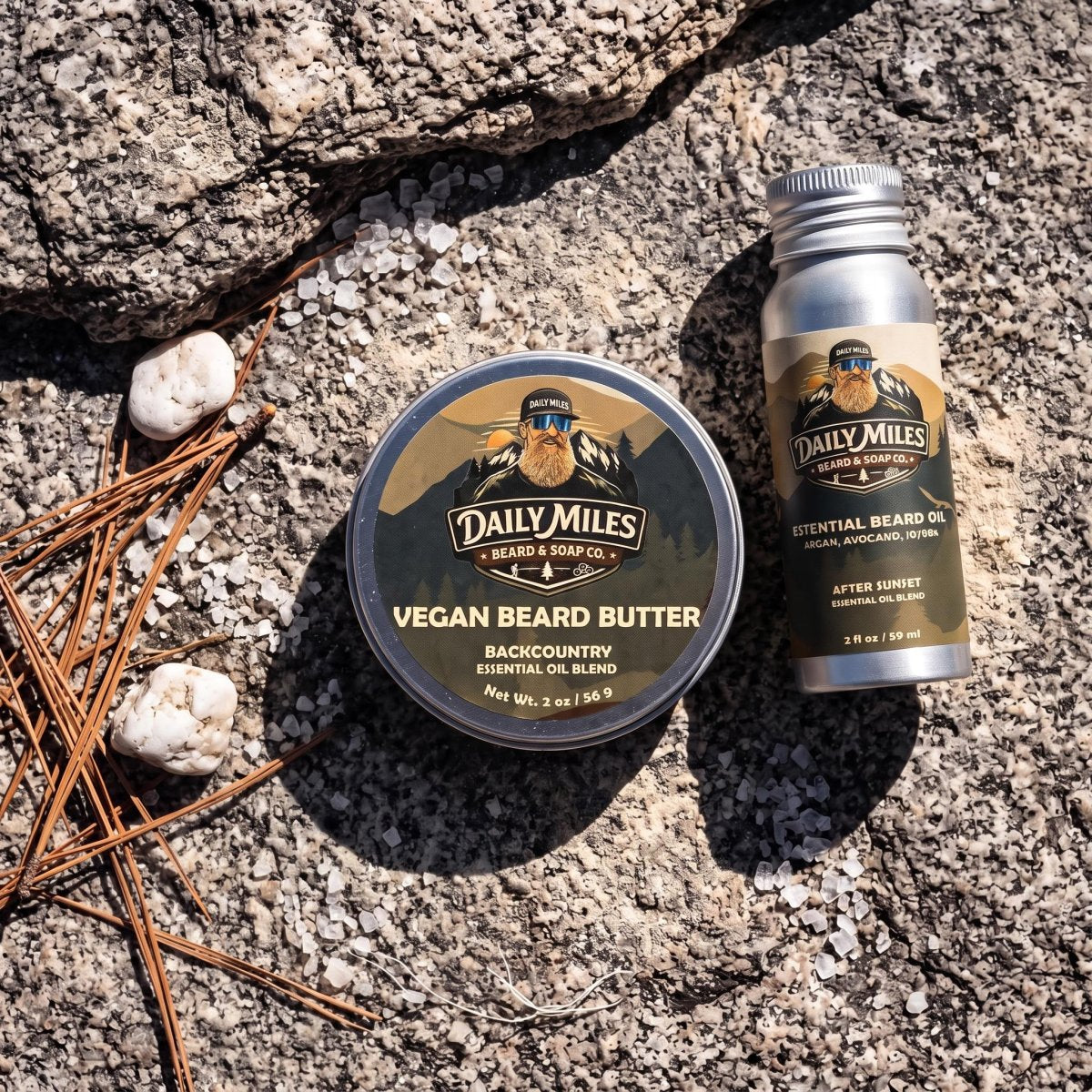
The "After Sunset" ritual is non-negotiable. Night is when your body repairs itself. Your beard needs the same opportunity. Use Backcountry Beard Butter for deep overnight conditioning. It is heavier than oil but remains breathable. It sinks in. It repairs. We use rosemary and pine in our formulations to support scalp health and circulation. This is where resilience starts. Recovery is the most important part of the grooming cycle. Without it, the next day's protection is built on a weak foundation. Don't skip the work.
Finish your day with a focused application of After Sunset Beard Oil to replenish the essential lipids lost to the sun and wind.
Daily Miles: Gear Built for the Long Haul
Daily Miles is not a grooming brand. It is a performance brand. We don't manufacture in boardrooms; we test on the trail. Every product in our lineup is forged in the outdoors to meet the demands of high-mileage athletes. Knowing how to protect beard from sun and wind requires more than just knowledge. It requires tools that won't fail when the conditions turn. We provide the resilience you need to keep moving. Small-batch artisan production ensures every bottle meets our standard of discipline.
Our core lineup is built for the specific stressors of an active lifestyle. After Sunset Beard Oil is the ultimate post-exposure recovery tool. It replenishes the lipids lost to UV stress and wind friction. Backcountry Beard Balm provides a performance hold that breathes. It uses plant-based resins instead of heavy waxes to ensure your skin stays cool during intense efforts. For the cleanup, Ultra Soft Beard Wash removes sweat and environmental grit without taking shortcuts. It leaves the hair clean but never stripped. This is gear designed by runners, for runners.
Tested on the Trail, Built with Intention
We believe in the philosophy of "tested miles." Our products aren't just mixed in a lab. They are carried through mountain ranges and across desert floors. This real-world testing led us to our 2oz bottle size. This is double the industry standard. We provide the volume athletes need for daily, consistent protection. Our commitment to palm-free and bee-free formulations is about more than ethics. It is about performance. We prioritize plant-based resins because they offer superior breathability and durability in extreme temperatures. No animal fats. No cheap fillers. Just pure intention.
Simplifying Your Ritual
Grooming shouldn't be a distraction from your training. It should be a part of it. We take a no-nonsense approach to beard care. Our Ritual Bundles are designed to streamline your daily routine. You get the pre-exposure shield and the post-run recovery in one methodical system. It is about efficiency and effectiveness. You have enough variables to manage on a long-distance pursuit. Your beard protection shouldn't be one of them. Consistent rituals lead to consistent results. Equip yourself for the hard days and the recovery that follows.
Equip your beard for the next mile and ensure your facial hair is as resilient as your stride.
Master the Elements
Protection is a daily discipline. It requires the right tools. It demands a consistent ritual. You now have the blueprint for maintaining your beard through the hardest miles. Remember to shield the hair before you start and recover the skin once you finish. Mastery of how to protect beard from sun and wind isn't about vanity. It's about ensuring your gear lasts as long as your ambition. Your facial hair is part of your kit. Treat it with the same respect you give your training shoes or your bike.
Choose products that respect your effort. Our small-batch artisan quality is tested in the wild. We prioritize vegan and bee-free formulations to ensure your skin breathes during high-intensity training. These tools are designed for high-performance athletes who refuse to compromise on ethics or results. We understand the grit of the trail because we're out there with you. Don't let environmental damage sideline your progress. Take control of your recovery today.
Shop Performance Beard Care Built for the Long Haul
The trail is waiting. Keep moving. Stay resilient.
Frequently Asked Questions
Can I use regular sunscreen on my beard to protect it?
Regular sunscreen is formulated for skin and often leaves a thick, white residue on facial hair. It is difficult to distribute evenly through a thick beard and can be a hassle to wash out. Instead of traditional SPF, focus on how to protect beard from sun and wind by using oils with high oxidative stability. These provide a lightweight barrier without the greasy buildup of standard sunblocks.
How often should I apply beard oil if I run every day?
Apply beard oil at least once a day, but twice is optimal for daily runners. Apply your first dose to damp hair before your morning miles to create a protective shield. Follow up with a second application after your post-run shower. This double-layered approach ensures your hair remains hydrated during the effort and recovers quickly once the work is done. Consistency is the foundation of resilience.
Will windburn make my beard hair fall out?
Windburn itself won't cause hair follicles to die, but it leads to significant breakage and thinning. High-velocity wind creates microscopic tears in the hair cuticle and strips away protective lipids. This leaves the hair brittle and prone to snapping. Over time, this mechanical damage makes the beard look sparse and unhealthy. Protecting the hair shaft with a plant-based balm is the best way to prevent this structural failure.
Does sweat damage my beard if I don’t wash it immediately?
Sweat is a silent destroyer of beard health. As sweat evaporates, it leaves behind concentrated salt crystals that act as abrasives against the hair shaft. These crystals also magnify UV radiation, accelerating sun damage. If you don't rinse your beard immediately after a workout, these salts cause chronic dehydration and lead to a "crunchy" texture. A simple cool water rinse is your first line of defense against this salt-driven attrition.
Why is bee-free beard balm better for high-intensity training?
High-intensity training requires gear that breathes. Beeswax is a dense, occlusive material that traps heat and sweat against your face, often leading to skin irritation and clogged pores. Bee-free balms use plant-based resins like Copaiba to provide a durable hold without the suffocating seal. This allows for natural skin respiration and thermal regulation. You stay cooler on the climbs and your skin stays clear through the heavy sweat of a hard effort.
How do I stop my beard from feeling greasy while I am running?
To avoid a greasy sensation, always apply your products to damp hair rather than dry. Water helps the oil penetrate the hair shaft instead of sitting on the surface. Choose lightweight, plant-based formulations that absorb quickly. After application, use a wide-tooth beard comb to distribute the product evenly. This prevents heavy clusters of oil from trapping sweat and feeling heavy while you are redlining on the trail.
What is the best way to clean my beard after a dusty trail run?
Start with a thorough rinse using cool water to flush out the largest particles of grit. Follow this with a dedicated, sulfate-free cleanser like Ultra Soft Beard Wash. This ensures you remove the trail dust and salt without stripping the essential sebum your hair needs for elasticity. Avoid using harsh body soaps. They are too alkaline and will leave your beard feeling like straw after a long, dusty effort.
Read more

Your beard shouldn't feel like a wire brush against your face at mile twenty. High-intensity training demands more from your grooming than just a quick rinse. When you push your limits, your facial...
Sweat isn't the enemy of your beard; salt is. When you're deep into a trail run, that burning sensation isn't just moisture. It's salt crystallization. It turns your facial hair into sandpaper agai...