
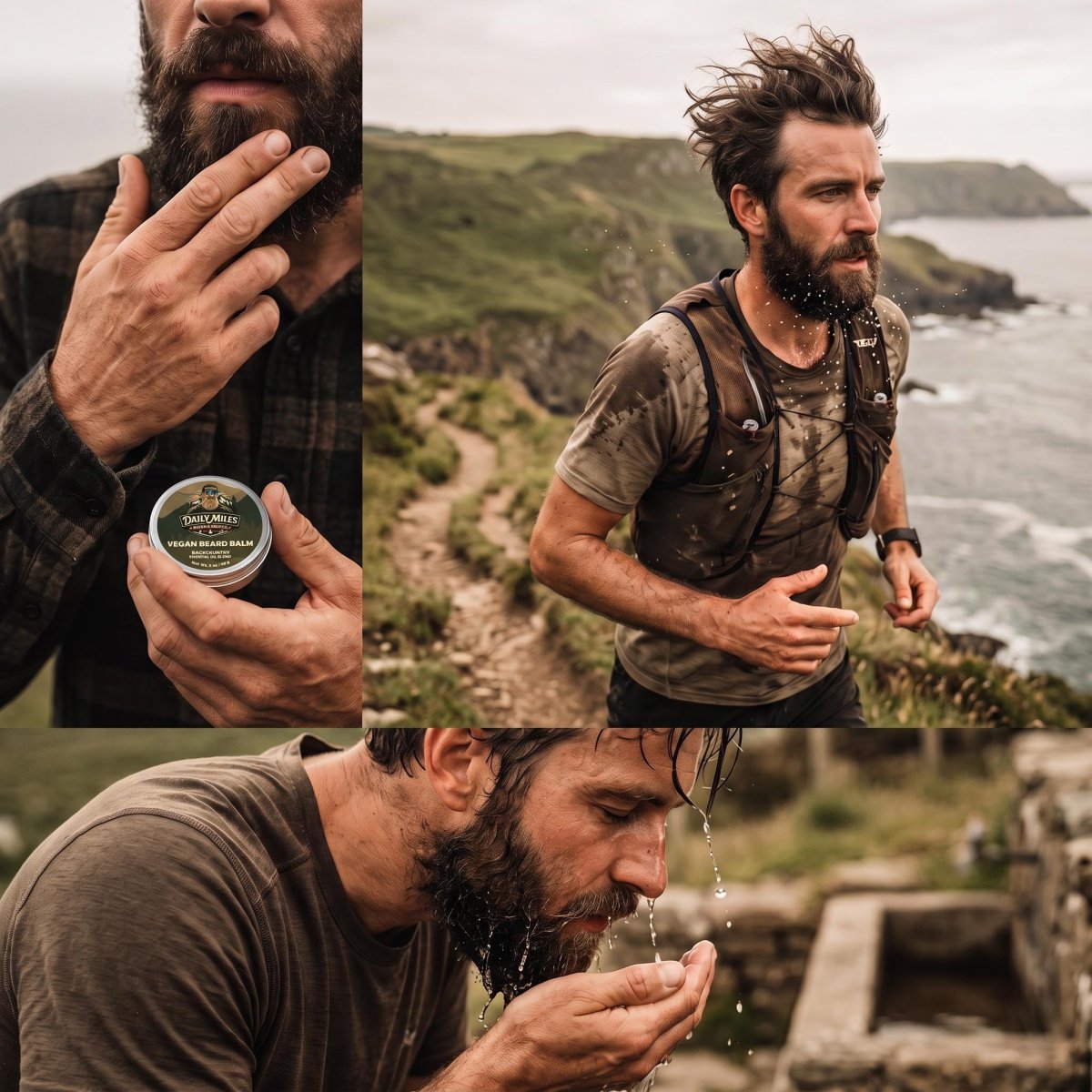
Outdoor Beard Grooming: The Athlete’s Guide to Trail-Ready Facial Hair
A record 183 million Americans participated in outdoor recreation in 2025, pushing their bodies and their gear to the absolute limit. For the bearded athlete, this surge in activity brings a specific set of challenges that standard routines simply cannot handle. Between salt buildup from sweat and the dehydrating effects of wind, your facial hair often becomes a source of irritation rather than a point of pride. This is why outdoor beard grooming is no longer a luxury; it is a fundamental part of your performance kit.
We agree that your focus should remain on the trail, not on the itch beneath your chin. You deserve a routine that works as hard as your lungs do without clogging your pores or weighing you down. This guide will show you exactly how to protect, maintain, and recover your beard during high-intensity adventures. We will walk through the essential shielding protocols, explain the necessity of breathable ingredients, and outline a recovery ritual that prepares you for the next mile. It is time to stop fighting the elements and start mastering them.
Key Takeaways
- Identify how UV radiation and windburn strip natural oils. Protect the hair. Prevent brittle breakage.
- Shield your beard before the first mile. Use Backcountry Beard Balm to create a durable barrier against the elements.
- Switch to bee-free formulations to let your skin breathe. Avoid trapped sweat. Prevent heat rashes and clogged pores.
- Flush salt and grime with a gentle, sulfate-free wash. Cleanse the skin. Recover for the next day of exertion.
- Master a routine for outdoor beard grooming that fits a busy athletic schedule. Consistency is performance. Soft hair is the result.
Why the Great Outdoors is Brutal on Your Beard
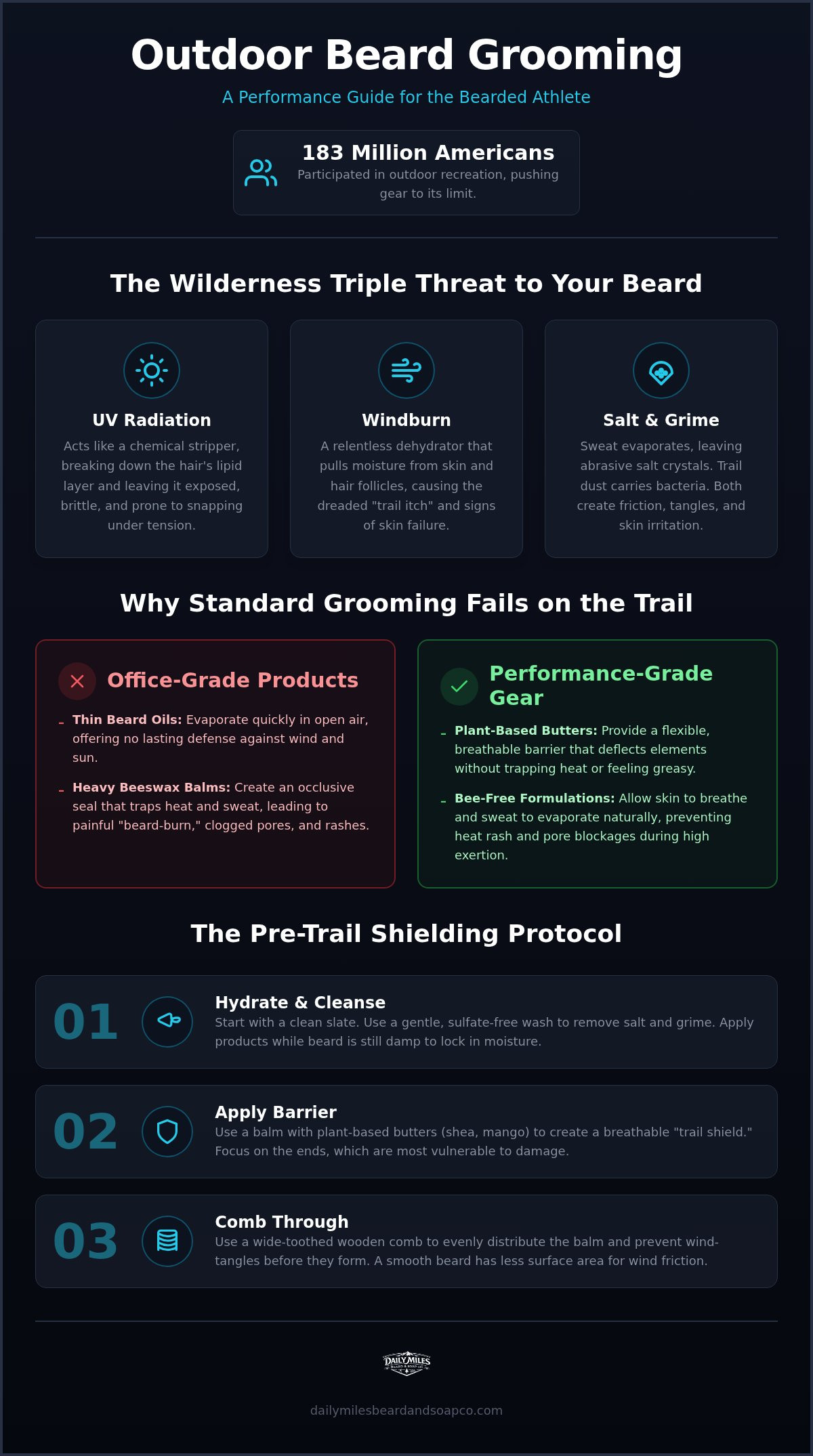
The wilderness is a high-friction environment. It tests your gear. It tests your resolve. It tests your facial hair. For the athlete, outdoor beard grooming is a matter of protection rather than vanity. Nature uses a specific set of tools to degrade your beard. UV radiation acts as a chemical stripper. It breaks down the lipid layer of the hair. This leaves the cuticle exposed and brittle. Without a barrier, hair snaps under the slightest tension.
Windburn is equally destructive. Constant airflow acts as a relentless dehydrator. It pulls moisture from the skin and the follicle simultaneously. This creates micro-fissures in the dermis. You feel this as the "trail itch." It is a sign of skin failure. Trail dust is more than dirt. It is a carrier for bacteria and environmental pollutants. These particles settle deep within the beard matrix. They become trapped against the skin by sweat and natural oils. This creates a breeding ground for breakouts and folliculitis. It is a cycle of irritation that ruins focus.
The Triple Threat: Wind, Sun, and Salt
Wind is more than a breeze. It is a convective drying agent. It accelerates the loss of natural sebum, leaving hair vulnerable to the sun. At high altitudes, the atmosphere is thinner. UV exposure increases significantly for every 1,000 feet of elevation. Your beard becomes a sponge for radiation. Salt is the final blow. As you sweat, the water evaporates. The salt remains. These micro-crystals are abrasive. They sit on the hair shaft and create friction. Every movement of your head causes these crystals to grind against the hair. This leads to split ends and impossible tangles.
Why Standard Grooming Fails on the Trail
Most commercial products are designed for the office. They are built for climate-controlled rooms and short walks to the car. Traditional beard oils are too thin. They evaporate in the open air before you reach the trailhead. They offer no lasting defense. Heavy, wax-based products are even worse for the athlete. Beeswax creates an occlusive seal. This traps heat against your face. It prevents sweat from escaping. This leads to "beard-burn" and painful rashes. You need a performance-grade barrier. A "trail shield" like Backcountry Beard Balm provides protection without clogging pores. It stays in place through high-intensity effort. It works as hard as you do.
Pre-Trail Preparation: Shielding Your Beard from the Elements
Preparation is the foundation of endurance. You wouldn't head into the backcountry with a dull blade or an empty water bladder. Your outdoor beard grooming routine starts before you lace your boots. A clean slate is mandatory. Use a mild cleanser like Ultra Soft Beard Wash to remove residual salt and environmental pollutants. This resets the hair's pH and opens the cuticle for protection. If you start with dirty hair, you are simply sealing in the bacteria that causes breakouts during high-intensity effort.
Apply your barrier while the hair is still damp. Water provides the hydration. The balm provides the seal. Focus heavily on the ends of the hair. These are the oldest, most porous sections of your beard. They take the brunt of UV radiation and wind friction. By saturating the ends first, you prevent the wicking effect where the environment pulls moisture out of the follicle. This is how you prevent the brittle texture that often follows a long day in the sun.
The Backcountry Shielding Protocol
Step 1: Hydrate the skin beneath the hair. Use a light application of After Sunset Beard Oil or ensure the dermis is damp after your wash. This prevents the skin from pulling moisture away from the hair follicles. Step 2: Apply Backcountry Beard Balm. This is your breathable trail shield. It uses plant-based butters to deflect wind and sun without trapping heat or sweat. Step 3: Comb through. Use a wide-toothed comb to prevent wind-tangles before they start. A smooth beard has less surface area for the wind to catch, reducing the risk of breakage during your miles.
Choosing the Right Gear for the Miles
Your kit should be as intentional as your training. A beard comb for thick hair is essential gear for even distribution. Wood is superior to plastic. It does not generate static and absorbs a small amount of oil to keep the hair conditioned during the day. Plant-based butters like shea and mango provide a flexible, durable barrier. They outperform synthetic silicones that can leave your beard feeling greasy in the heat. For portable grooming, keep a small tin of balm in your trail vest. If you are out for more than six hours, a mid-trail reset may be necessary. This keeps the barrier intact against the elements.
Streamline your preparation with a Ritual Bundle designed for the active man.
The Science of Sweat: Why Bee-Free Products Win
Sweat is the body's primary cooling mechanism. When you are pushing up a steep grade or maintaining a high cadence, your skin must breathe. Outdoor beard grooming requires a product that supports this physiology rather than fighting it. Traditional balms often rely on beeswax. While beeswax provides a strong hold, it is an occlusive agent. It creates a waterproof seal that prevents moisture from escaping. For the sedentary man, this is a non-issue. For the athlete, it is a tactical error. You are essentially capping your cooling system exactly where you need it most.
This suffocating seal does more than just trap heat. It creates a micro-climate of friction and moisture. As you move, the hair rubs against the skin. Without the ability to vent, this friction turns into inflammation. The result is a beard that feels heavy and skin that feels raw. You need ingredients that work with your sweat, not against it. Ethical performance means choosing plant-based solutions that offer durability without the compromise of comfort.
Pore Health During High-Intensity Effort
As your heart rate climbs, your pores dilate to release sweat. If those pores are capped by a heavy wax, the sweat has nowhere to go. It pools against the skin, mixing with trail dust and bacteria. This trapped environment leads to "beard-burn," a painful combination of heat rash and irritation. Comedogenic ingredients are substances specifically known to block pores and cause breakouts. In the context of athletics, using comedogenic waxes is like wearing a plastic bag over your face during a marathon. It is inefficient. It is uncomfortable. It is avoidable. Clear skin is a byproduct of disciplined ingredient selection.
The Vegan Advantage for Outdoorsmen
Performance shouldn't come at the cost of your skin's health. A true sweat proof beard balm must be breathable. We use plant-based alternatives like candelilla wax and shea butter. These ingredients provide the structure needed to keep your beard in place without the suffocating seal of animal byproducts. Candelilla has a higher melting point than beeswax. It stays solid even when the sun beats down on the open road. It offers a disciplined hold that responds to your body's heat without liquefying. Shea butter provides deep nourishment while remaining non-comedogenic. It allows sweat to pass through the hair matrix, keeping your face cool and your skin clear. This is the resilient expert's choice. Choose gear that respects your effort.
Post-Adventure Recovery: Washing Away the Grime
The effort ends. The recovery begins. After a high-mileage day, your beard is a reservoir for salt, dust, and environmental toxins. If left alone, these elements crystallize. They irritate the skin. They cause breakage. Effective outdoor beard grooming demands a post-trail protocol that prioritizes hygiene and replenishment. Start by flushing the hair with lukewarm water. Do not use hot water. Heat further dehydrates the already stressed cuticle. You want to rinse away the surface grit before applying any product.
The Two-Step Recovery Wash
Cleanse without stripping. Avoid harsh sulfates at all costs. Sulfates are industrial degreasers. They have no place on an athlete’s face. Use Ultra Soft Beard Wash to lift trail dust and pollutants. Target the skin. Massage the wash into the roots where sweat and bacteria accumulate. For a deeper reset, use the Quiet Miles Face & Beard Soap bar. It is a dual-purpose tool designed for efficiency. It clears the pores without disrupting the skin's natural moisture barrier. This prevents "beard-druff" and the inflammation that follows a heavy sweat session. Consistency in this ritual ensures you are ready for the next day's exertion.
Rehydrating for the Next Mile
Washing is only half the battle. You must replenish the nutrients lost to wind and sun. A dedicated beard care routine for runners focuses on this immediate rehydration. Apply After Sunset Beard Oil while the hair is slightly damp. This is your overnight repair gear. It delivers plant-based nutrients deep into the follicle. It soothes windburn. It calms the skin. If your beard feels particularly parched, apply Backcountry Beard Butter. This provides a slow-release moisture layer for maximum recovery. You are not just cleaning hair. You are maintaining a performance asset. Restore your skin and hair after the trail with the Quiet Miles Face & Beard Soap.
Mastering Your Outdoor Grooming Ritual
Discipline is not just for the miles. It is for the recovery. Mastering outdoor beard grooming requires a shift in perspective. You must view your products as performance tools. Use them with intent. Consistency is the only path to long-term results. A sporadic routine leads to skin failure. Your skin is a living sensor. Listen to it. When the air turns dry and cold, increase your use of Backcountry Beard Butter. When the humidity climbs, rely on the lighter shield of our beard oil. Adjust. Adapt. Overcome. The goal is a beard that remains soft despite the elements. Resilience is earned through daily effort.
Building a Minimalist Trail Kit
Efficiency is the hallmark of the experienced outdoorsman. Your kit should be lean. Pack only what you need to maintain your shield. The essentials are simple: a tin of Backcountry Beard Balm, a wooden Beard Comb, and a travel-sized Ultra Soft Beard Wash. Storage is a tactical consideration. Keep your balm in a cool, shaded pocket of your pack. Do not leave it in direct sunlight. Heat can degrade the integrity of the plant-based butters over time. For those who value a streamlined system, our Ritual Bundles offer the complete solution. One kit. All the gear. No guesswork. It is the most efficient way to ensure your grooming stays consistent on the road.
A Commitment to the Outdoors
We run the trails. We climb the peaks. We have a responsibility to protect these spaces. Choosing palm-free and vegan products is a tactical decision for the planet. Mass-produced chemicals and synthetic fillers have no place in the wilderness. They don't belong on your face. Small-batch production ensures every ingredient is tested for performance. It maintains the integrity of the botanical oils. By choosing intentional grooming, you join a community of performance-minded outdoorsmen. We value grit. We value transparency. We value the finish line. A healthy beard is a resilient beard. It is ready for the next mile. It is forged in the dirt and recovered in the ritual. This is how you master the art of the trail-ready beard.
Master Your Environment
Success on the trail is defined by preparation. Your beard is no exception. Effective outdoor beard grooming is a discipline of defense and recovery. You have learned to shield your hair before the first mile. You understand why bee-free, plant-based formulas are essential for skin breathability during high-intensity exertion. You know that recovery starts with flushing away the salt and replenishing lost nutrients. These are the habits of the resilient outdoorsman. Every step in this ritual serves a purpose. Every product is a tool for your endurance.
Don't leave your comfort to chance. Our products are tested on the trails to ensure they meet the demands of your most difficult days. We prioritize plant-based performance. We remain committed to bee-free and palm-free integrity. This is gear designed for the grit of the outdoors. It is time to treat your grooming with the same intentionality as your training routine. Focus on the work. Trust your gear. Gear up with the Backcountry Beard Grooming Kit. Protect your skin. Maintain your hair. Stay ready for the miles ahead.
Frequently Asked Questions
How do I stop my beard from itching when I sweat?
Sweat turns to salt as it evaporates on the trail. This salt creates physical friction that irritates the skin beneath your facial hair. To stop the itch, rinse your face with lukewarm water immediately after your workout. Follow with After Sunset Beard Oil to calm the dermis and restore the moisture lost during your effort. This simple recovery step prevents the dryness that leads to chronic irritation.
Can I use regular hair shampoo on my beard after a hike?
You should avoid regular hair shampoo for facial hair recovery. Scalp shampoo is designed for thicker skin and contains aggressive detergents that strip your face of natural protection. These chemicals leave your beard brittle and prone to breakage after exposure to the elements. Stick to a dedicated cleanser like Ultra Soft Beard Wash to lift grime while maintaining essential hydration levels.
Will beard balm melt off my face in high heat?
High-quality plant-based balms will not melt off during exercise. Ingredients like candelilla wax have a significantly higher melting point than beeswax or synthetic fillers. Backcountry Beard Balm is engineered to stay solid and effective even when the sun beats down on the open road. It provides a reliable barrier that will not liquefy and run into your eyes during high-intensity movement or mountain climbs.
How often should I wash my beard if I run every day?
You should rinse with water every day to clear salt and sweat. However, only use a dedicated soap like Ultra Soft Beard Wash three to four times a week. This frequency removes grime without destroying the natural lipid layer. Balancing hygiene with hydration is a core principle of outdoor beard grooming that ensures your hair remains resilient through daily training sessions and heavy exertion.
What is the best way to protect my beard from windburn?
A physical barrier is your best defense against windburn. Apply a generous amount of Backcountry Beard Balm to a damp beard before you start your activity. This seals the hair cuticle and prevents the wind from wicking away internal moisture. It is a critical preparation step that keeps your facial hair from becoming a tangled, dry mess after a day of cycling or hiking in open terrain.
Does trail dust damage facial hair permanently?
Trail dust causes cumulative structural damage if left in the hair. These microscopic particles act as abrasives that grind against the hair shaft during movement, leading to split ends and breakage. Consistent outdoor beard grooming requires washing away these particles immediately after your adventure. This prevents the dust from causing permanent damage to the hair cuticle and keeps your beard soft for the next mile.
Can I use beard oil and balm together for outdoor activities?
Layering oil and balm is the superior strategy for long-distance athletes. Apply a few drops of After Sunset Beard Oil to the skin beneath the beard to maintain hydration and skin health. Follow this with a layer of balm on the hair itself to act as a trail shield. This two-layer approach provides both deep nourishment and external protection that lasts for hours in harsh environments.
Why is bee-free beard balm better for athletes?
Breathability is the primary reason performance-minded men choose bee-free products. Beeswax creates a waterproof seal that traps sweat and heat against the skin, which often leads to rashes or beard-burn. Plant-based alternatives allow your skin to cool naturally while maintaining a disciplined hold. This ensures your skin stays clear and comfortable even when your heart rate and body temperature climb during a peak effort.
Read more
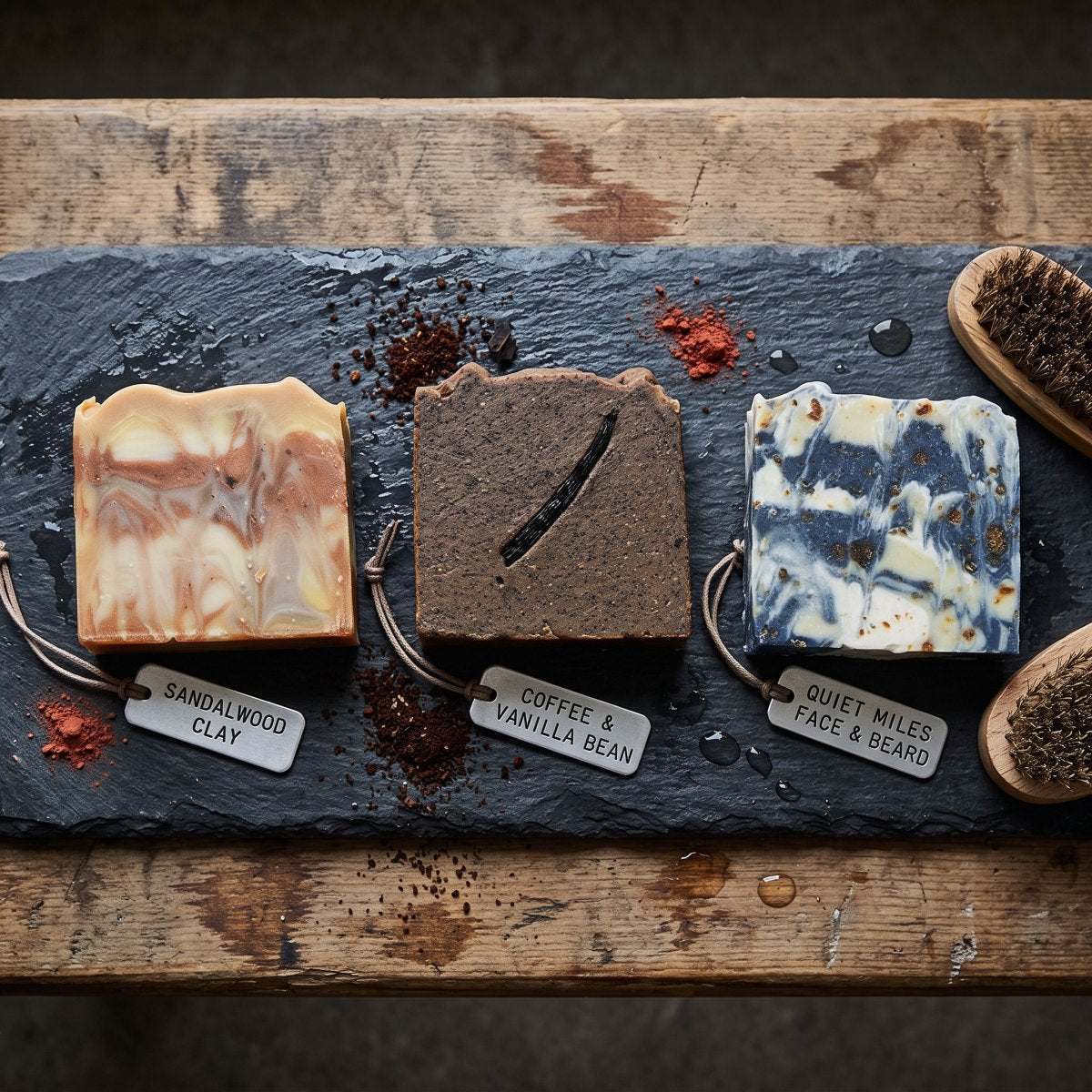
Your recovery doesn't start with a foam roller. It starts in the shower. Most athletes treat hygiene as an afterthought. They use harsh, mass-market bars. These bars strip away more than just sweat...
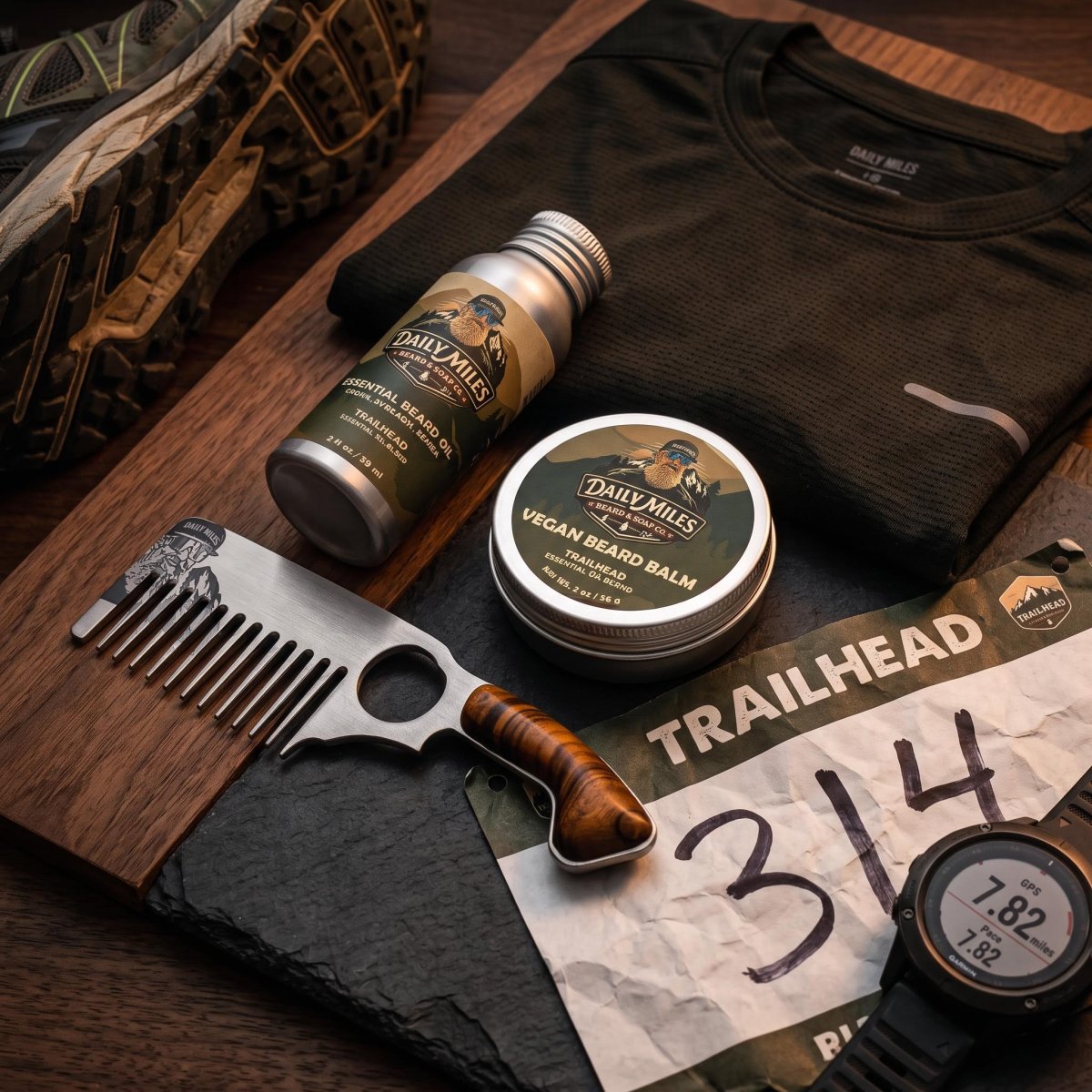
Why do most grooming kits fail the moment you hit mile five? For the high-performance athlete, a beard is a commitment that must endure sweat, salt, and relentless sun. You already know that standa...