
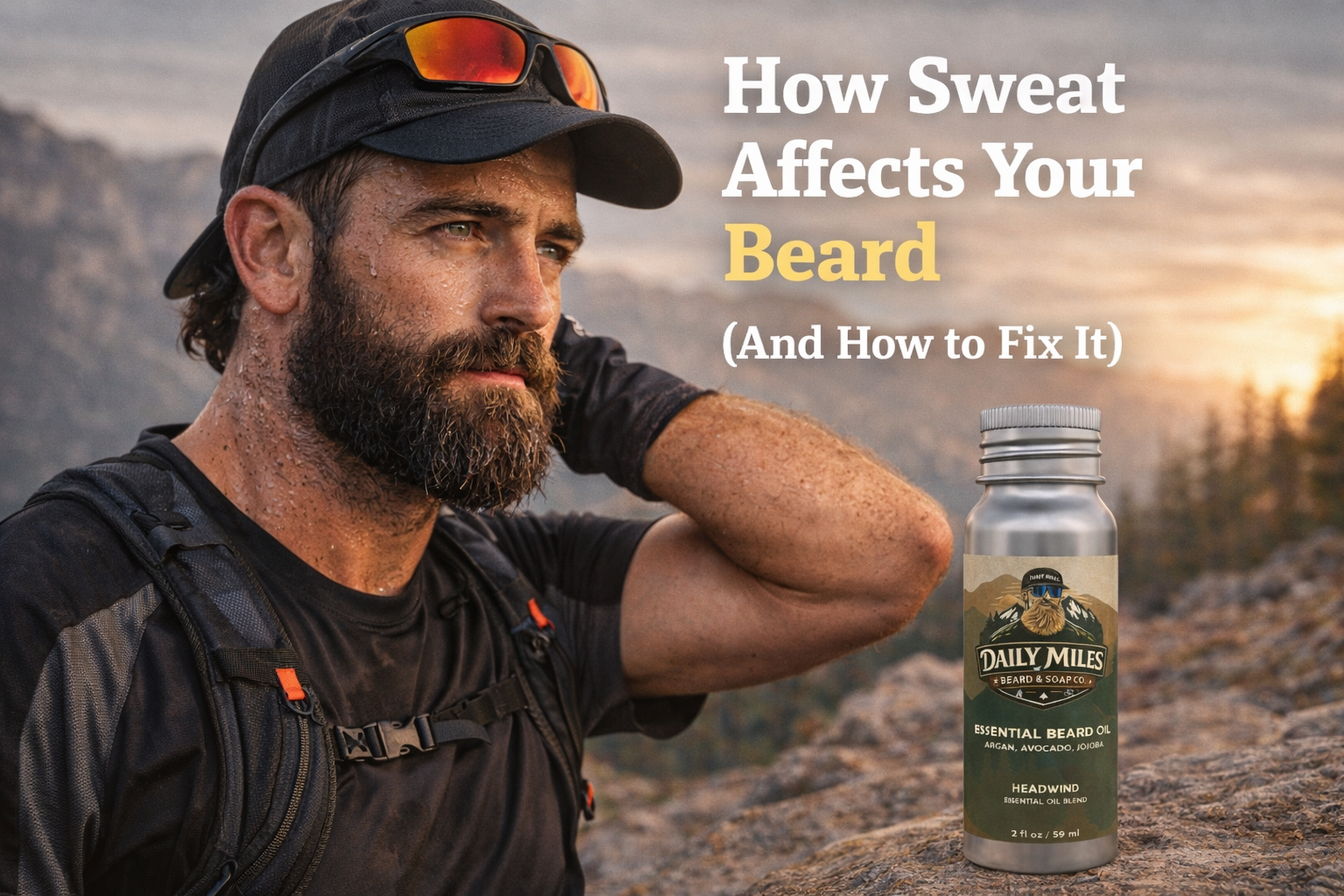
How Sweat Affects Your Beard (And How to Fix It)
If you train regularly, you already know how sweat affects your skin. But many athletes don’t realize that sweat can also have a major impact on their beard.
Whether you’re running, cycling, hiking, or training in the gym, sweat can dry out facial hair and irritate the skin underneath it. Over time, this can lead to itchiness, beard dandruff, and brittle hair.
Understanding what sweat does to your beard — and how to manage it — can make a huge difference in keeping your beard healthy while living an active lifestyle.
Why Sweat Is Tough on Your Beard
Sweat itself isn’t harmful, but the salt and minerals in sweat can create problems for both hair and skin.
When sweat dries on your beard, the salt left behind can pull moisture away from your hair and skin. This can cause:
• Dry, brittle beard hair
• Itchy skin underneath the beard
• Beard dandruff (sometimes called “beardruff”)
• Irritated or inflamed skin
Athletes who train outdoors also deal with sun exposure and wind, which can amplify the drying effects of sweat.
If you’re training daily, these effects can build up quickly.
Why Athletes Experience More Beard Irritation
Active people often shower multiple times per day after workouts. While staying clean is important, frequent washing can strip away the natural oils that keep both your skin and beard healthy.
Combine that with sweat, salt, and environmental exposure, and it’s easy to see why many runners, cyclists, and outdoor athletes struggle with beard dryness.
Without proper care, your beard can start to feel rough, itchy, or uncomfortable.
Signs Sweat Is Affecting Your Beard
If you’re active and noticing any of the following, sweat may be playing a role:
• Your beard feels dry after workouts
• The skin under your beard becomes itchy
• You notice small flakes in your beard
• Facial hair feels rough or brittle
These are all common issues for athletes who train regularly.
The good news is they are easy to fix with a simple beard care routine.
How to Protect Your Beard from Sweat
Taking care of your beard while training doesn’t need to be complicated. A few small habits can make a big difference.
Rinse Your Beard After Workouts
After a run or ride, rinse your beard with water to remove sweat and salt. This helps prevent dryness and irritation.
If you shower after training, use a gentle cleanser that won’t strip away too many natural oils like our Ultra Soft Beard Wash.
Keep Your Beard Hydrated
Because sweat and frequent washing remove moisture, hydration is key.
Using a beard oil daily helps replace the natural oils that your skin loses during training.
A good beard oil will:
• moisturize the skin under your beard
• soften facial hair
• reduce itch and irritation
• help prevent beard dandruff
For athletes who train daily, this can make a noticeable difference in beard comfort.
Avoid Overwashing
Washing your beard too often with harsh soaps can make dryness worse.
Instead, focus on rinsing with water after workouts and using a gentle beard cleanser when needed.
Use a Simple Daily Routine
The best time to apply beard oil is after a shower.
Just a few drops massaged into the skin and beard hair can help restore moisture and keep your beard healthy throughout the day.
Beard Care That Keeps Up With Your Training
For runners, cyclists, hikers, and outdoor athletes, beard care should be simple and effective.
Your grooming routine should support the life you live — not add more complexity to your day.
At Daily Miles Beard & Soap Co., we create grooming products designed for people who move. Whether you’re heading out before sunrise or finishing a long day on the trail, your beard should feel comfortable and healthy through every mile.
Because when you’re putting in the work, your gear — including your grooming routine — should be built to keep up.
Read more

If you run, ride, train, or spend long hours outdoors, your beard goes through more stress than most people realize. Sun exposure, sweat, wind, and salt can all dry out facial hair and the skin un...
Do you need beard oil every day? Learn when daily use matters, how much to use, and why it’s essential for active lifestyles.